Sammy needs to step up its game. | Image by PhoneArena
There's a new South Korean report that paints a bleak picture of Samsung's near future in one particular regard. While the ongoing RAM shortage is driving profits way up for Samsung in Q1 2026, there is a shortage of companies that would want to do business with Samsung Foundry.
The 60% yield barrier
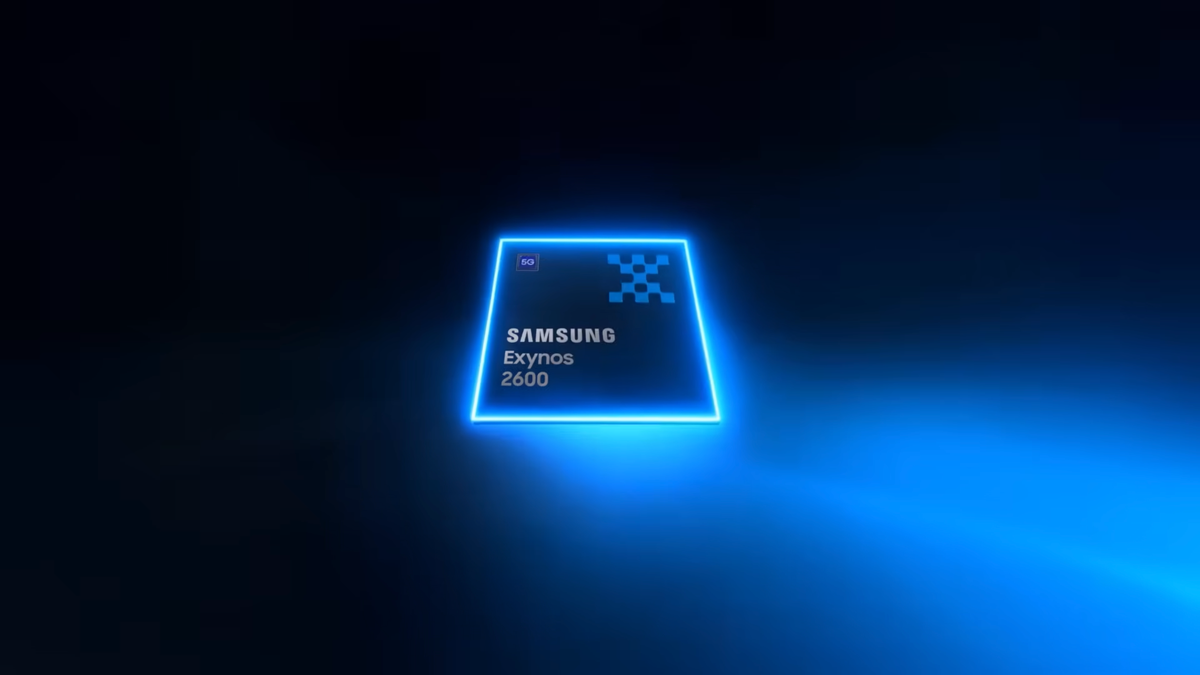
The Exynos 2600 was unveiled in 2025. | Image by Samsung
Per the machine-translated report, Samsung's foundry business is apparently stuck at the "60% mass production" barrier in its 2nm process. A single nanometer, or 1nm, equals one-billionth of a meter and in chips it basically refers to how tiny and advanced the transistors are. The smaller the number, the more powerful and efficient the chip can be, as a rule of thumb.
Recommended For You
Now, the Galaxy S26 and the Galaxy S26 Plus that are being sold in Europe, for example, have a 2nm chip on board (the Exynos 2600). Their counterparts that are sold in the US, on the other hand, come with the 3nm Snapdragon 8 Elite Gen 5.
Now, you might say that since the Exynos 2600 is a 2nm chip, it is overall "better" than the 3nm Snapdragon 8 Elite Gen 5. Not so fast: US consumers always get the best hardware possible, so this chip duality just goes to show that Samsung isn't fully convinced of its Exynos 2600 powers.
Recommended For You
The bigger picture
So, Samsung's chip-making arm is stuck below the level needed for smooth 2nm production, with too many chips failing to meet quality standards. That means the process is not yet reliable or cheap enough for big clients like Apple to fully commit.
Until yields improve, Samsung will have a hard time competing with TSMC at the cutting edge.
Per the latest stats, Samsung is stuck in the mid-50% range yield. After accounting for backend processes, the effective yield is expected to fall to around 40%.
It's great that we've moved to the 2nm node stage, but the process isn't smooth and issue-free right now.
An industry insider familiar with the situation said that yields are currently in the 50–60% range, averaging about 55%.
What is the chipset you're hyped about?
Improving fast(er)
Things might seem bad, but in reality, Samsung has been advancing.
Until the second half of last year, Samsung's 2nm yields were reportedly stuck in the 20% range. That's very low.
In less than a year, they have risen to the mid-50% level, which is considered technically sufficient to operate a production line. This improvement is believed to be driven in part by orders for bitcoin mining semiconductors from Chinese firms such as Canaan and MicroBT, which helped accumulate process experience.
Given the difficulty of the ultra-fine 2nm node, some view this rate of progress as exceptional.
What's the problem?
With defect rates still high, nearly half of produced chips are unusable, making the process weak in both cost competitiveness and reliability.
After additional losses from sorting and packaging, only about 40% of chips may actually be sellable, and given the high cost of advanced wafers, even small yield changes can swing profits massively. At this level, the process is functioning but not stable enough for customers to depend on, especially with concerns around consistency and delivery.
Where is TSMC?
At the same time, TSMC is reportedly achieving stronger 60–70% yields at 2nm, putting Samsung Electronics in a transitional position — technically advancing but not yet competitive for major clients like Apple, NVIDIA or AMD.
While some smaller and internal orders are in place, and projects like Tesla's AI6 chip are planned, overall success will depend on whether yields improve enough.
Sebastian, a veteran of a tech writer with over 15 years of experience in media and marketing, blends his lifelong fascination with writing and technology to provide valuable insights into the realm of mobile devices. Embracing the evolution from PCs to smartphones, he harbors a special appreciation for the Google Pixel line due to their superior camera capabilities. Known for his engaging storytelling style, sprinkled with rich literary and film references, Sebastian critically explores the impact of technology on society, while also perpetually seeking out the next great tech deal, making him a distinct and relatable voice in the tech world.
A discussion is a place, where people can voice their opinion, no matter if it
is positive, neutral or negative. However, when posting, one must stay true to the topic, and not just share some
random thoughts, which are not directly related to the matter.
Things that are NOT allowed:
Off-topic talk - you must stick to the subject of discussion
Offensive, hate speech - if you want to say something, say it politely
Spam/Advertisements - these posts are deleted
Multiple accounts - one person can have only one account
Impersonations and offensive nicknames - these accounts get banned
To help keep our community safe and free from spam, we apply temporary limits to newly created accounts:
New accounts created within the last 24 hours may experience restrictions on how frequently they can
post or comment.
These limits are in place as a precaution and will automatically lift.
Moderation is done by humans. We try to be as objective as possible and moderate with zero bias. If you think a
post should be moderated - please, report it.
Have a question about the rules or why you have been moderated/limited/banned? Please,
contact us.







![T-Mobile customers get confirmations for account activity they didn't authorize [UPDATED]](https://m-cdn.phonearena.com/images/article/179616-wide-two_350/T-Mobile-customers-get-confirmations-for-account-activity-they-didnt-authorize-UPDATED.webp)








Things that are NOT allowed:
To help keep our community safe and free from spam, we apply temporary limits to newly created accounts: