US Mobile challenges AT&T, T-Mobile, Verizon, cable, and MVNOs with unique offering
US Mobile's new convergence bundle goes where your provider can't.
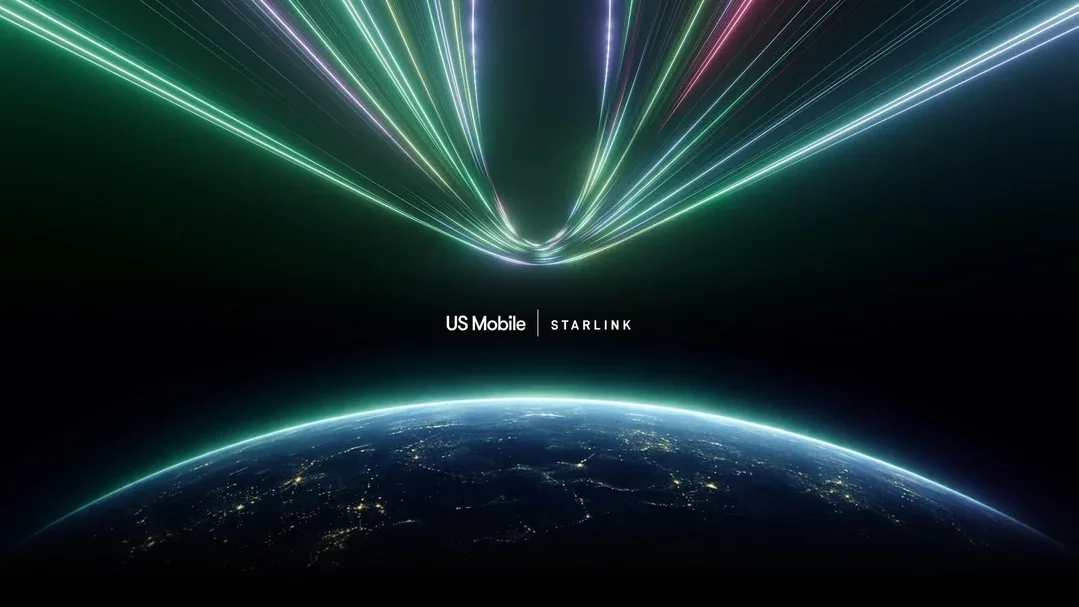
US Mobile and SpaceX have joined forces to redefine convergence. | Image by US Mobile
We are in the thick of convergence wars. As facilities-based providers and MVNOs alike replicate cable's convergence strategy to foster loyalty, US Mobile has put a new spin on the approach, offering customers unprecedented flexibility.
With agreements across all three major providers, US Mobile already holds an edge by not forcing users to choose a single network. This allows customers to switch between carriers based on local coverage.
By partnering with Starlink, US Mobile is taking its convergence strategy orbital. Unlike 5G Home Internet or fiber, which rely on terrestrial towers and cables, Starlink beams internet directly from low-earth orbit (LEO).
This means users can count on cellular connectivity while travelling through Canada and Mexico, while their internet remains accessible virtually anywhere in the world.
The CEO of US Mobile, Ahmed Khattak, nerded out for those interested. Basically, combining disparate networks into a super carrier is an uphill battle. Each carrier works differently, whether it's in terms of latency or billing systems. Adding satellite tech adds another layer of complexity.
In short, these different services weren't designed to work together, but US Mobile stepped up to the challenge. The company spent a decade making different networks work in harmony, positioning it to integrate satellite connectivity into its existing stack.
As more LEO providers such as Amazon's Kuiper emerge, the satellite options will expand.
For customers, this means ubiquitous connectivity. The stitching together of major terrestrial networks and LEO constellations would mean that, instead of managing multiple connections as a fail-safe, US Mobile would be handling the entire ecosystem.
While Ookla reports that Starlink is fast enough for resource-intensive tasks such as video conferencing and gaming, it still trails behind 5G internet and fiber in raw speed.
However, with median speeds steadily increasing, it is becoming a viable option for many customers, particularly those underserved by traditional providers.
By bundling wireless and satellite connectivity for under $50, US Mobile isn't just competing on tech, it's undercutting the giants on price.
Cellular service and 5G internet fiber satellite connectivity
Everything’s about to change. US Mobile and Starlink. 4.9.26. https://t.co/tz4YQIDmPC pic.twitter.com/RJiKwmTKef
— US Mobile - America's Super Carrier (@USMobile) April 8, 2026
AT&T recently launched OneConnect, a cellular and fiber bundle providing one mobile line and fiber internet for $90 per month. T-Mobile's MVNO Mint Mobile countered with a wireless and 5G internet bundle starting at $45 per month.
Now, US Mobile has joined the fray, but with a unique twist. The MVNO runs a multi-network service that allows users to connect to AT&T, T-Mobile, and Verizon. The company is now marrying that flexibility with uncapped Starlink satellite internet for under $50 a month.
Specifics will be announced tomorrow.
We're launching US Mobile + Starlink as a single bundle. Unlimited Standard or Premium on all three major US networks (Warp, Darkstar, Lightspeed), plus reliable home internet from space. One plan. One bill. One app. One company that actually picks up the phone.
Ahmed Khattak, CEO US Mobile, April 2026
Connectivity from the ground up and the sky down
With agreements across all three major providers, US Mobile already holds an edge by not forcing users to choose a single network. This allows customers to switch between carriers based on local coverage.
This means users can count on cellular connectivity while travelling through Canada and Mexico, while their internet remains accessible virtually anywhere in the world.
For now, the Direct to Cell technology isn't supported, but will eventually be rolled out.
While a multi-network MVNO sounds straightforward, there's a reason why US Mobile is one of a kind.
Engineering the super carrier
While a multi-network MVNO sounds straightforward, there's a reason why US Mobile is one of a kind.
I think people deserve to understand why "multi-network" and "super carrier" basically don't exist outside of US Mobile.
Ahmed Khattak, CEO US Mobile, April 2026
The CEO of US Mobile, Ahmed Khattak, nerded out for those interested. Basically, combining disparate networks into a super carrier is an uphill battle. Each carrier works differently, whether it's in terms of latency or billing systems. Adding satellite tech adds another layer of complexity.
To make a true multi-network experience work, you have to build a unification layer that sits above all of it.
Ahmed Khattak, CEO US Mobile, April 2026
In short, these different services weren't designed to work together, but US Mobile stepped up to the challenge. The company spent a decade making different networks work in harmony, positioning it to integrate satellite connectivity into its existing stack.
For customers, this means ubiquitous connectivity. The stitching together of major terrestrial networks and LEO constellations would mean that, instead of managing multiple connections as a fail-safe, US Mobile would be handling the entire ecosystem.
What will make you buy both cellular and internet service from the same company?
Is it good enough?
While Ookla reports that Starlink is fast enough for resource-intensive tasks such as video conferencing and gaming, it still trails behind 5G internet and fiber in raw speed.
By bundling wireless and satellite connectivity for under $50, US Mobile isn't just competing on tech, it's undercutting the giants on price.

Follow us on Google News

Popular stories

Latest News

Things that are NOT allowed:
To help keep our community safe and free from spam, we apply temporary limits to newly created accounts: