We may earn a commission if you make a purchase from the links on this page.
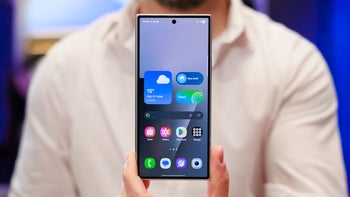
The Galaxy S26 is now official following Samsung's Unpacked event on February 25. The smallest flagship of the Galaxy S26 series comes equipped with the latest Qualcomm chipset, tuned "for Galaxy," and also features a bigger display and battery.
The upgrades might seem minor, but how does the Galaxy S26 compare to the previous base models from the same series? And should you upgrade if you already have a Galaxy flagship from one or two generations back?
Today, we're focusing on the Galaxy S26vs. the Galaxy S24, as the two-year gap is still one of the most common upgrade cycles when it comes to smartphones.
The Galaxy S26 Ultra is now available for up to $720 off
$579
99
$1299
99
$720 off (55%)
The Galaxy S26 Ultra has been announced, bringing a Privacy Screen feature, insanely fast processor, and multiple Galaxy AI enhancements. Right now, you can save up to $720 at the Samsung Store with eligible trade-ins. You also get 15% off the Buds 4 series with your purchase. Alternatively, you can get $150 credit for add-ons, no trade-in required.
The Galaxy S26+ is now available for up to $480 off
$619
99
$1099
99
$480 off (44%)
The Galaxy S26+ is here, bringing improved software and a more powerful processor. The device can now be yours for up to $480 off with eligible device trade-ins. Users also get 15% off the Buds 4 series with their purchase. The official store gives you a $150 credit for add-ons without trade-ins.
The Galaxy S26 is currently available at the Samsung Store with an exciting trade-in discount. Right now, you can buy the model with a $380 maximum price cut. Samsung also gives you 15% off the Galaxy Buds 4 or the Buds 4 Pro with your smartphone purchase.
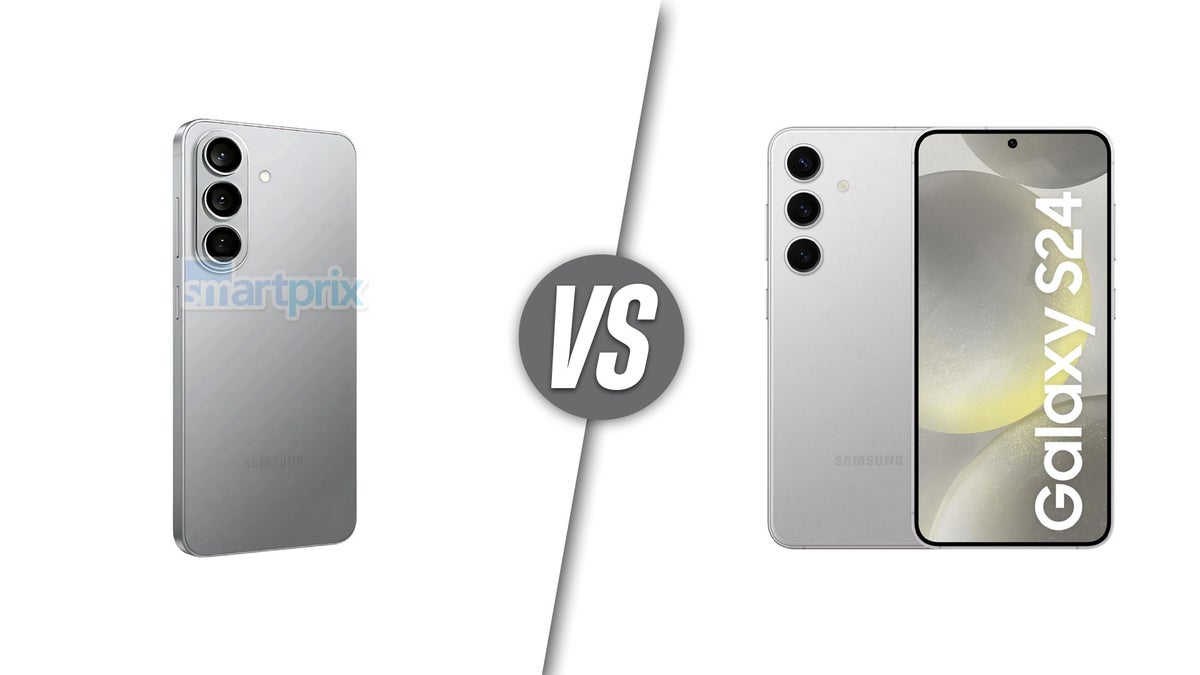
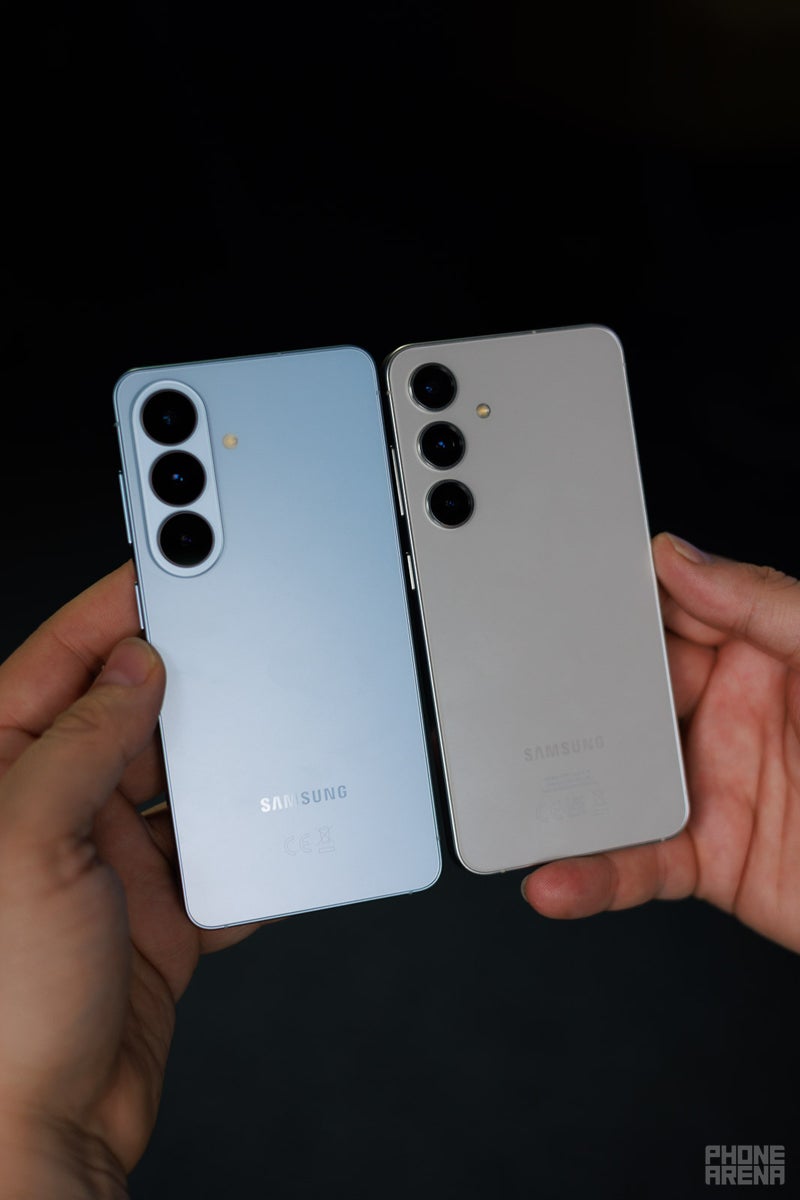
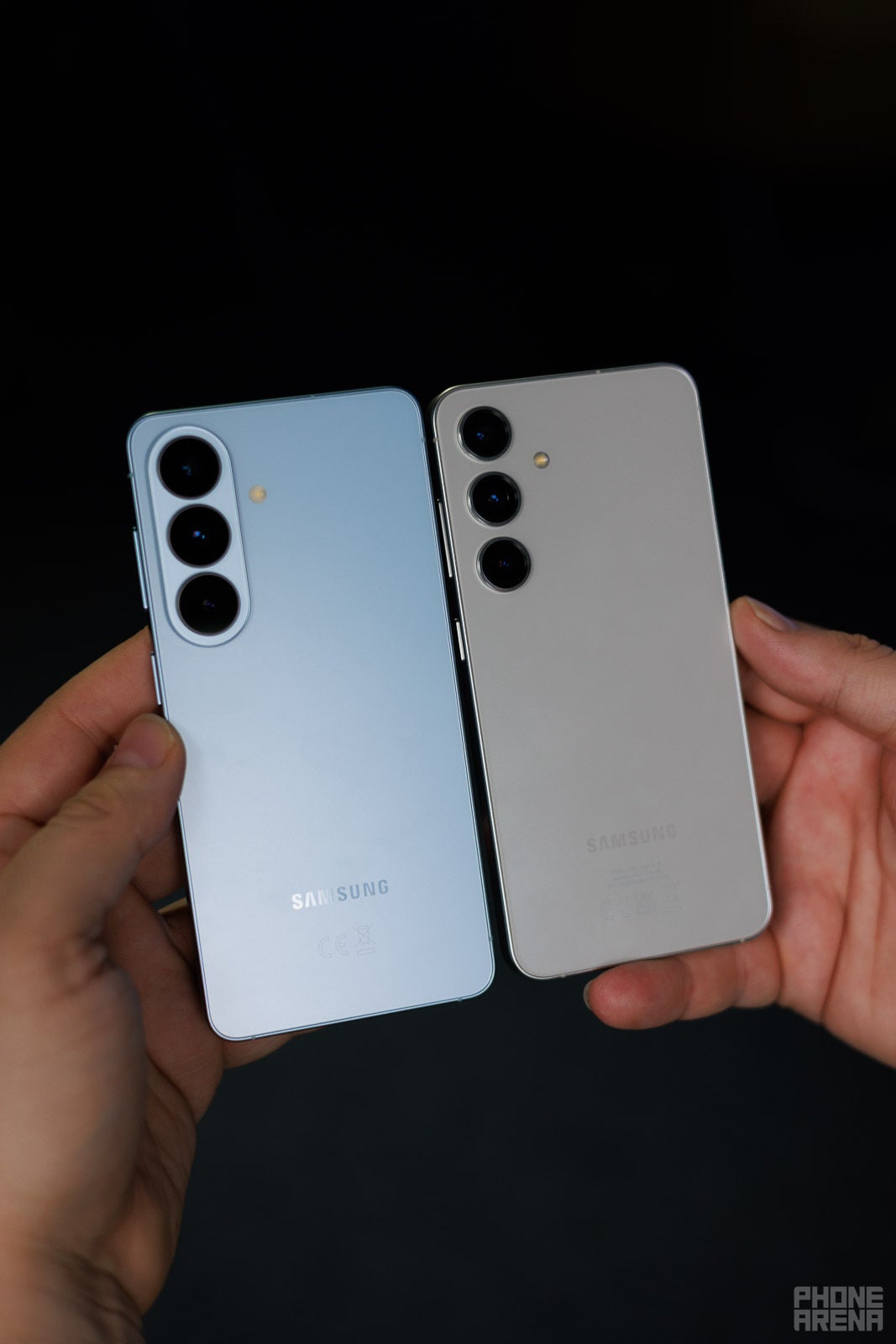
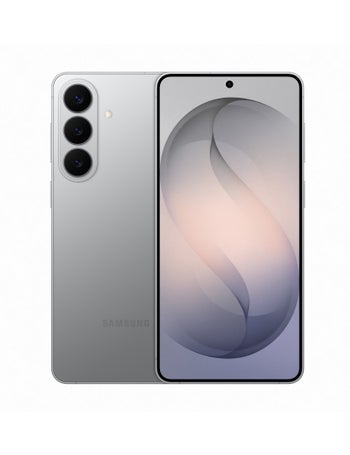
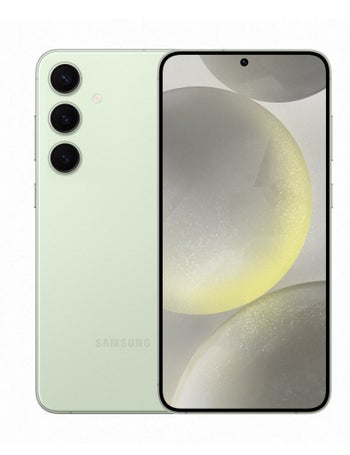
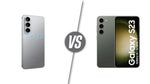
The design of the Galaxy S26 follows closely the previous couple of generations with one change. The camera housing now features an oval, pill-shaped bump, whereas in the previous couple of generations we had a separate holes for the different cameras.
In comparison, the Galaxy S24 features the aforementioned separate cutouts for its three cameras, and it's a classy and clean design. The S24 is also a bit more compact thanks to the smaller screen, but the Galaxy S26 managed to keep the weight exactly identical at 167 grams, despite the bigger screen and battery.
Galaxy S26
Galaxy S24
Thickness 7.2 mm
Thickness 7.6 mm
Dimensions 149.6 x 71.7
Dimensions 147 x 70.6
Weight 167 grams
Weight 167 grams
The building blocks of the Galaxy S26 are metal and glass, namely aluminum and Gorilla Armor (which is а nice upgrade). The Galaxy S24 comes equipped with Gorilla Glass Victus 2 on its front and back. There's no fancy anti-reflecting coating on either of these two phones, it's reserved for the Ultra.
In terms of colors, Samsung is unifying the hues for all models this year. The S26 is available in Cobalt Violet, Sky Blue, Black and White, with two additional exclusive colors - Pink Gold and Silver Shadow. The Galaxy S24 available colors are as follows: Onyx Black, Marble Grey, Cobalt Violet, Amber Yellow, Jade Green, Sandstone Orange, and Sapphire Blue.
Display Differences
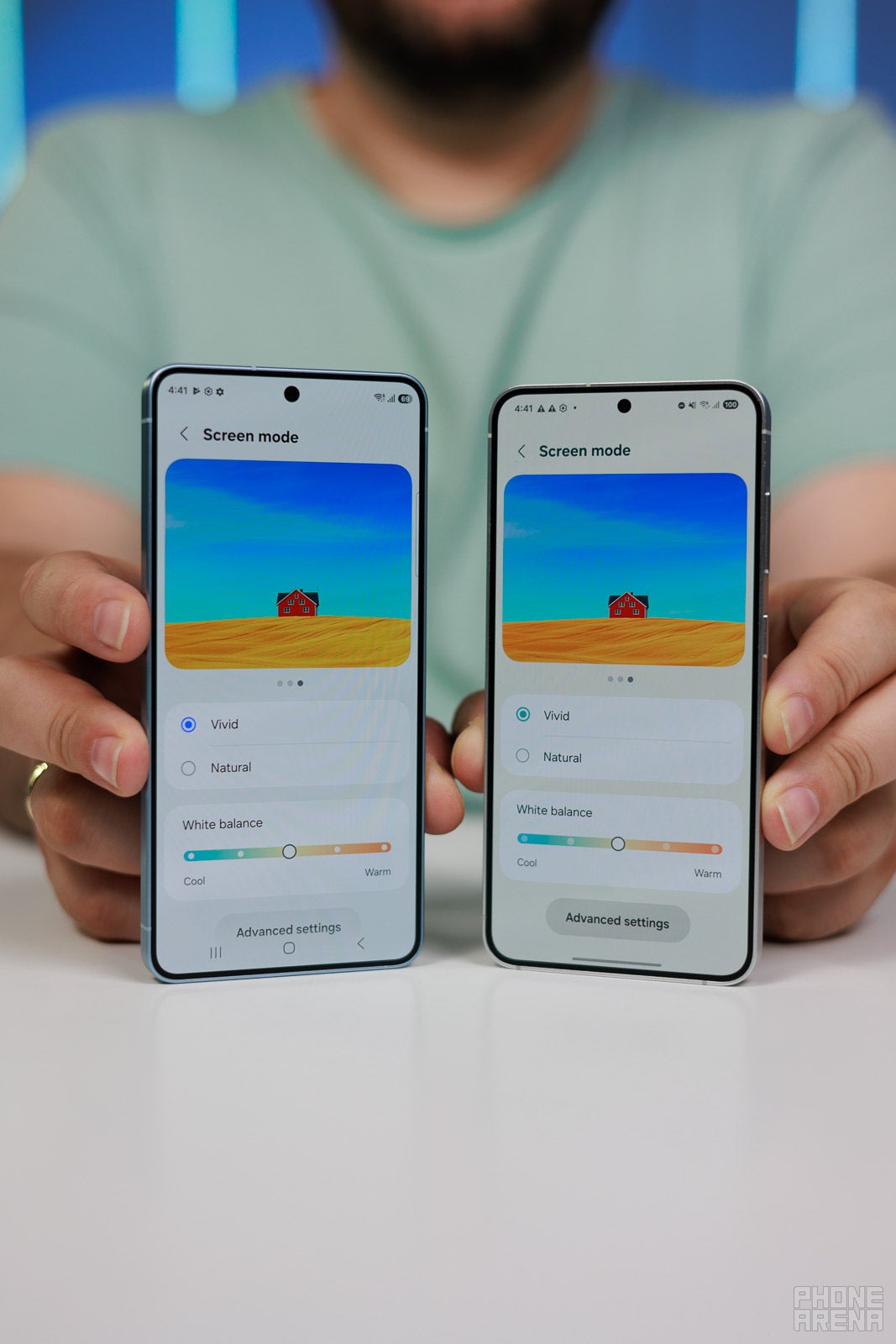
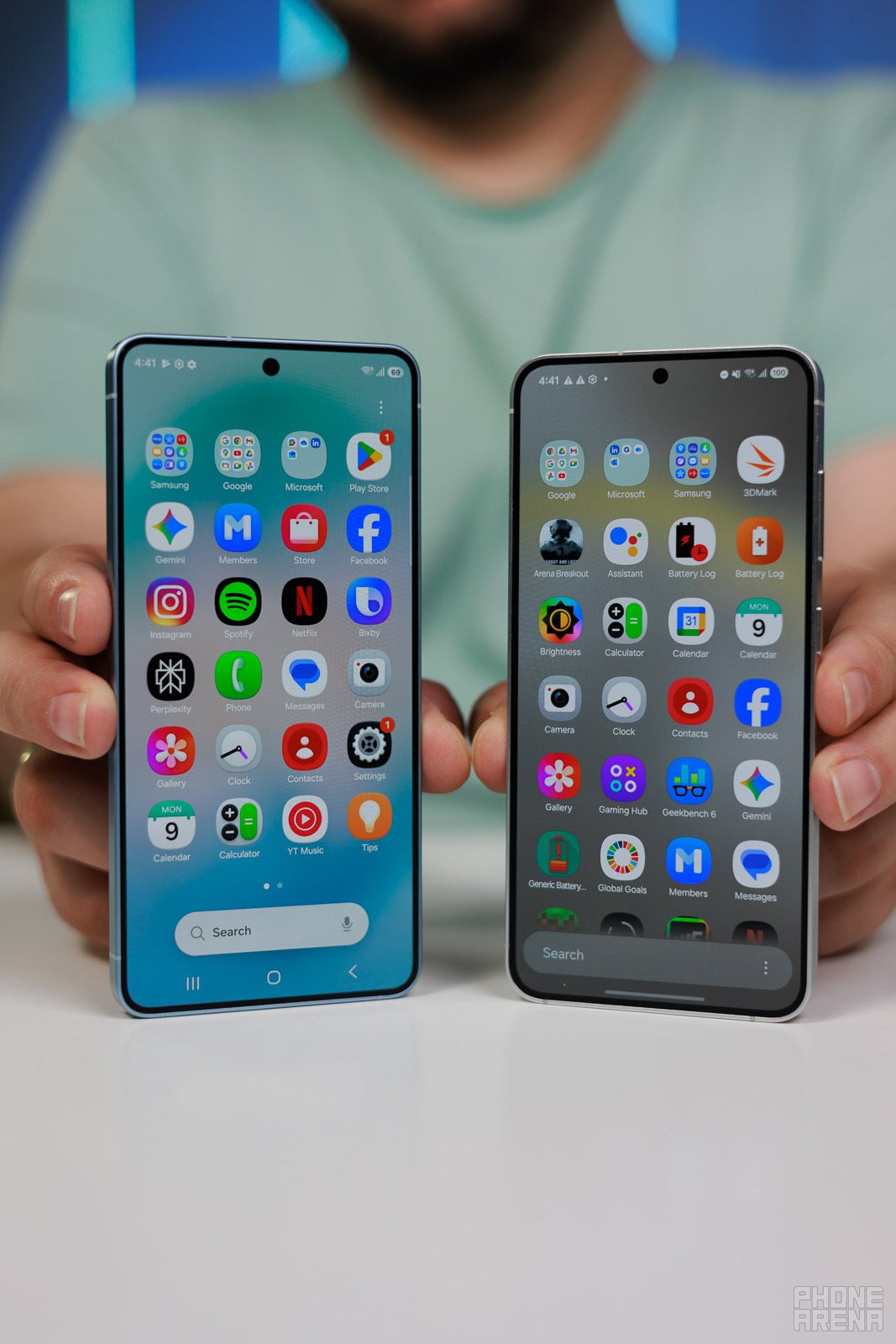
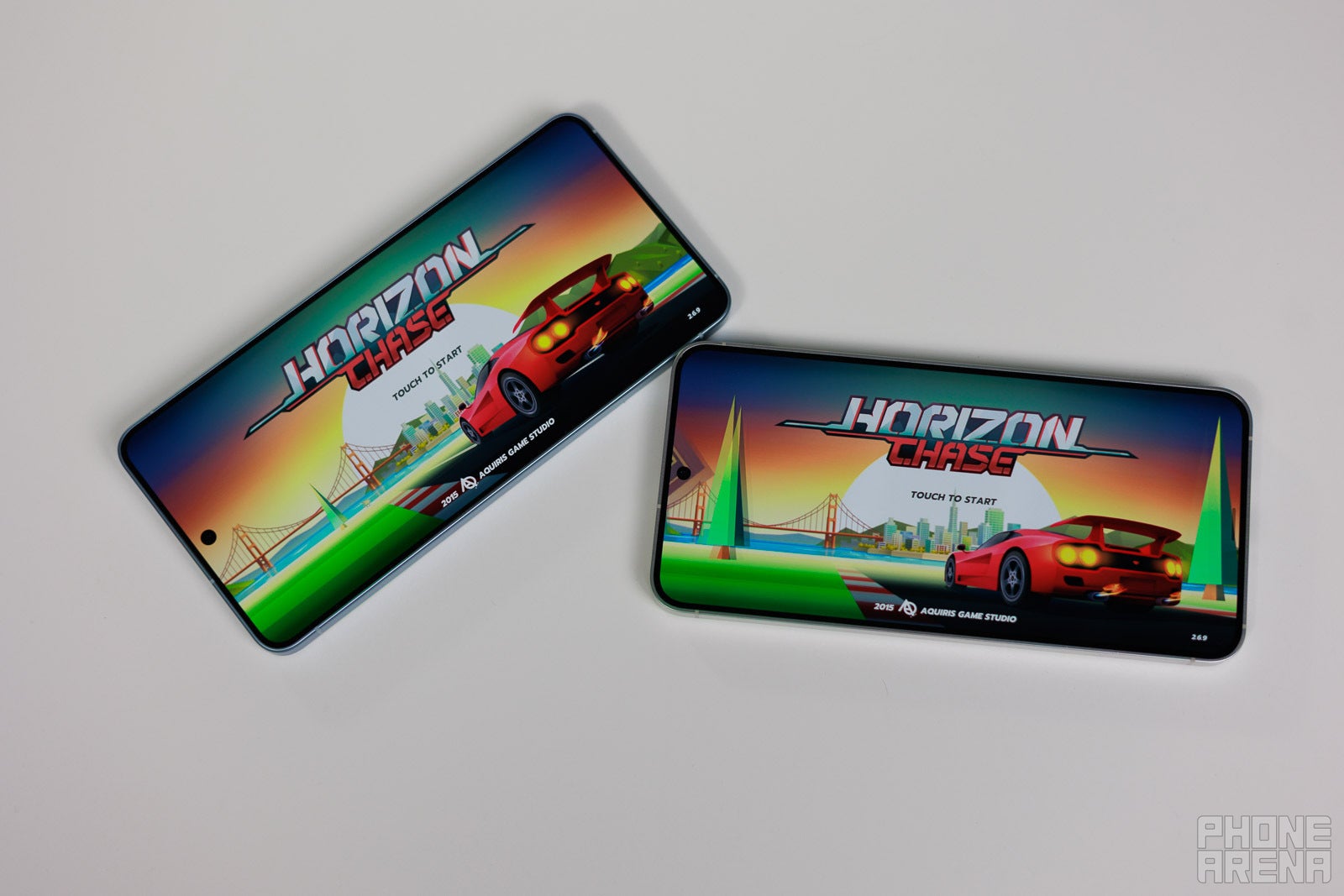
In terms of display size and technology, the Galaxy S26 features a slightly bigger 6.3-inch Super AMOLED screen with the same resolution, refresh rate and brightness as the previous two generations. Samsung claims 2600 nits peak brightness for the S26 - the same numbers can be found in the S25 and S24 specs sheets.
Speaking of testing, the Galaxy S24 managed to output 1345 nits at 100% APL, pretty impressive. The S24 features an FHD+ screen with a resolution of 1080 x 2340 pixels and a pixel density of around 416 PPI, as well as the same 1-120Hz dynamic refresh rate as the S26.
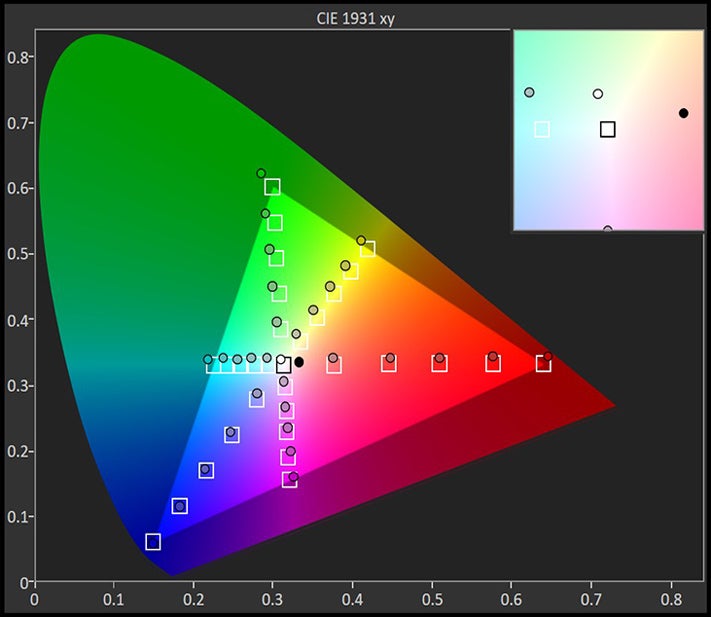
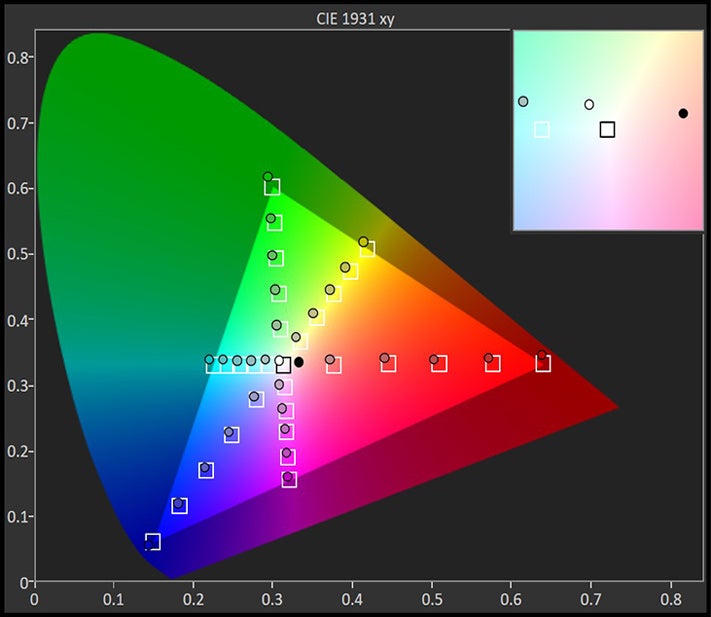
The CIE 1931 xy color gamut chart represents the set(area)of colors that a display can reproduce,with the sRGB colorspace(the highlighted triangle)serving as reference.The chart also provides a visual representation of a display's color accuracy. The small squares across the boundaries of the triangle are the reference points for the various colors, while the small dots are the actual measurements. Ideally, each dot should be positioned on top of its respective square. The 'x:CIE31' and 'y:CIE31' values in the table below the chart indicate the position of each measurement on the chart. 'Y' shows the luminance (in nits) of each measured color, while 'Target Y' is the desired luminance level for that color. Finally, 'ΔE 2000' is the Delta E value of the measured color. Delta E values of below 2 are ideal.
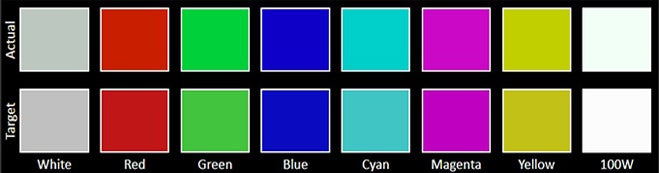
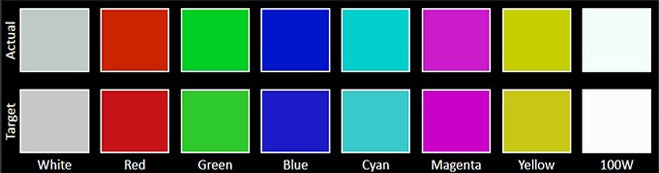
The Color accuracy chart gives an idea of how close a display's measured colors are to their referential values. The first line holds the measured (actual) colors, while the second line holds the reference (target) colors. The closer the actual colors are to the target ones, the better.
The Grayscale accuracy chart shows whether a display has a correct white balance(balance between red,green and blue)across different levels of grey(from dark to bright).The closer the Actual colors are to the Target ones,the better.
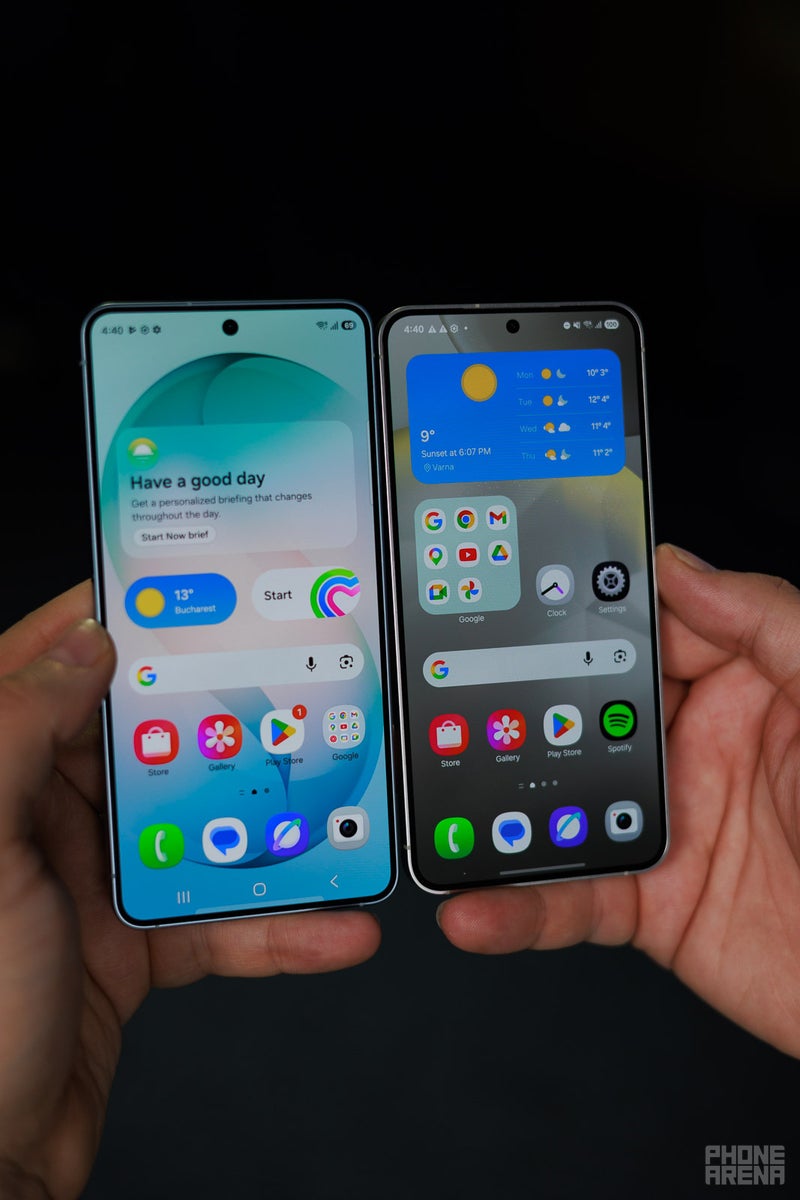
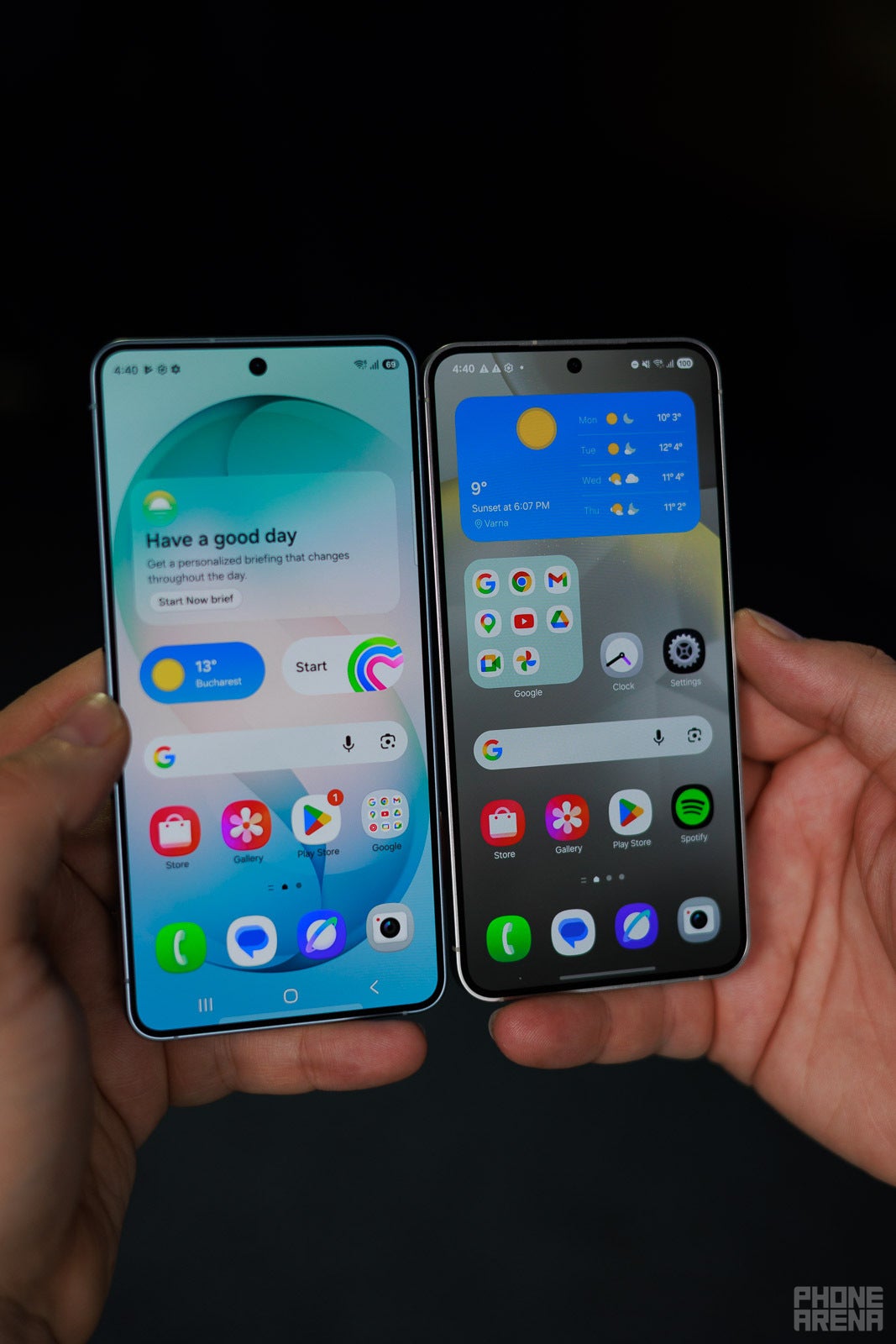
The AMOLED panels inside the S26 and S24 are almost identical. To the point where any difference can be attributed to margin error. Both phones manage to output around 2,400 nits, which is quite impressive, both can fall under 1 nit of brightness if necessary, both have great color reproduction and white balance.
The biometrics are also the same - the S26 sports the same ultrasonic fingerprint scanner as the one found on the previous generations. The bezels around the screen don't look all that narrow from what we can see on the official photos, stay tuned as the S26 is on it's way to our lab.
Performance and Software
Two generations do make a big difference
There's some good news and some bad news, depending on where in the world you live and whether or not you like Exynos chipsets. The Galaxy S26 features different silicon depending on the region. The phone comes equipped with an Exynos 2600 chipset in International markets, and the new and mighty Snapdragon 8 Elite Gen 5 in North America, China and Japan.
Geekbench scores of the new Qualcomm silicon are already out there, showing blazing fast performance. The single-core score of the chip lies around 3800 points, while the multi-core performance is at the impressive 12400 points.
In comparison, the Galaxy S24 features the two-year-old Snapdragon 8 Gen 3 (in the US, Canada, and China) and the Exynos 2400 internationally. The Qualcomm score of the S24 is around 2400 points in single-core and around 7000 points in multi-core performance, so we're talking about a big jump, almost two times bigger on the new Galaxy S26.
Let's see the benchmark scores!
Galaxy S26
Galaxy S24
Chip Qualcomm Snapdragon 8 Elite Gen 5 Exynos 2600
It looks like the Exynos 2600 is considerably faster than the two-year old Snapdragon 8 Gen 3. In single- and multi-core performance the Galaxy S26 comes on top, and the same goes for the graphics benchmarks, and by some margin.
Will you feel that huge difference in real life? Probably not. Nevertheless, the S26 is the faster phone here, and it's also more futureproof with the latest AI instructions baked in the hardware.
In terms of RAM, the new model keeps the same 12GB from the previous generation, which is still 4GB more than the 8GB on the S24.
Regarding the storage - Samsung has dropped the 128GB base variant and the Galaxy S26 now starts at 256GB. This is good news but bear in mind that it's reflected in the starting price of the Galaxy S26.
The Galaxy S26 launches with Android 16 out of the box with Samsung's One UI 8.5 on top. The Galaxy S24 launched with Android 14 and One UI 6 back in 2024, but the phone has been brought to Android 16 with the recent updates.
There are still five years of support left for the S24, and the Galaxy S26 will receive major Android versions all the way up to 2033.
Camera
No upgrades
After sticking with the same camera system in the past two generations, Samsung just did the same thing for yet another year. The Galaxy S26 features the exact same camera configuration as the last three models, including the Galaxy S24 we're comparing it to in this article.
We're looking at the same 50MP main camera, 12MP ultrawide, and 10MP telephoto for yet another year, and any improvements in image quality should be coming from new AI tricks and software algorithms.
Galaxy S26
Galaxy S24
Main 50 MP, f/1.8 24 mm 1/1.56"
Main 50 MP, f/1.8 24 mm 1/1.56"
Ultrawide 12 MP, f/2.2 13 mm 1/2.55"
Ultrawide 12 MP, f/2.2 13 mm 1/2.55"
Telephoto 10 MP, f/2.4 3X zoom (67mm) 1/3.94"
Telephoto 10 MP, f/2.4 3X zoom (67mm) 1/3.94"
PhoneArena Camera Score:
Photo
Video
Phone
Camera Score
Photo Score
Main (wide)
Ultra Wide
Selfie
Zoom
Samsung Galaxy S26
149
155
84
21
27
24
Samsung Galaxy S24
152
156
85
20
29
23
Phone
Camera Score
Video Score
Main (wide)
Ultra Wide
Selfie
Zoom
Samsung Galaxy S26
149
143
75
21
26
21
Samsung Galaxy S24
152
147
79
22
27
19
Find out more details about photo and video scores for all phones we have tested on our PhoneArena Camera Score page
The Galaxy S24 scored 152 (out of 158) in our composite camera benchmark, with the ultrawide score a bit low at 20 (out of 26). Strangely enough, the new Galaxy S26 scores 3 point below the S24, with an overall result of 149 points. The missing links here seem to be the selfie and main cameras. Let's check out the side-by-side samples.
Main Camera
< S26S24 >
< S26S24 >
< S26S24 >
< S26S24 >
< S26S24 >
The main camera samples from the Galaxy S24 look a tad more detailed and bright, especially in low-light conditions. Not that S26 samples are bad or anything, they just look less sharp, probably due to Samsung turning sharpening algorithms down a notch.
In good lighting conditions, both phones produce pleasant images, with good dynamic range and great level of detail. The S26 samples look just a tad more saturated when it comes to colors, and they also seem a bit warmer in color tone.
Recommended For You
Zoom Quality
< S26 10XS24 10X >
< S26 5XS24 5X >
< S26 3XS24 3X >
Zoom shots are pretty much identical, with just a slight difference in exposure, which can be attributed to conditions changing during the shot. 3X, 5X, and 10X samples all look comparable and they are decent for the 10MP telephoto camera both of these phones have. We're not talking periscope levels of zoom and quality here, but both the S24 and S26 get the job done when it comes to zoom shots.
Ultra-wide
< S26S24 >
< S26S24 >
< S26S24 >
< S26S24 >
At 12MP, the ultrawide camera, which is the same in both phones, starts to look a bit outdated. Many other brands have switched to 48-50MP ultrawide camera, and Samsung is definitely lagging behind with this one. That said, samples look okay, with enough detail and good sharpness.
Speaking of sharpness, the aggressive oversharpening is gone on the S26 and you can see the S24 samples quite processed, sometimes even grainy. The tonality again is slightly different - the S26 produces warmer photos.
Selfies
< S26S24 >
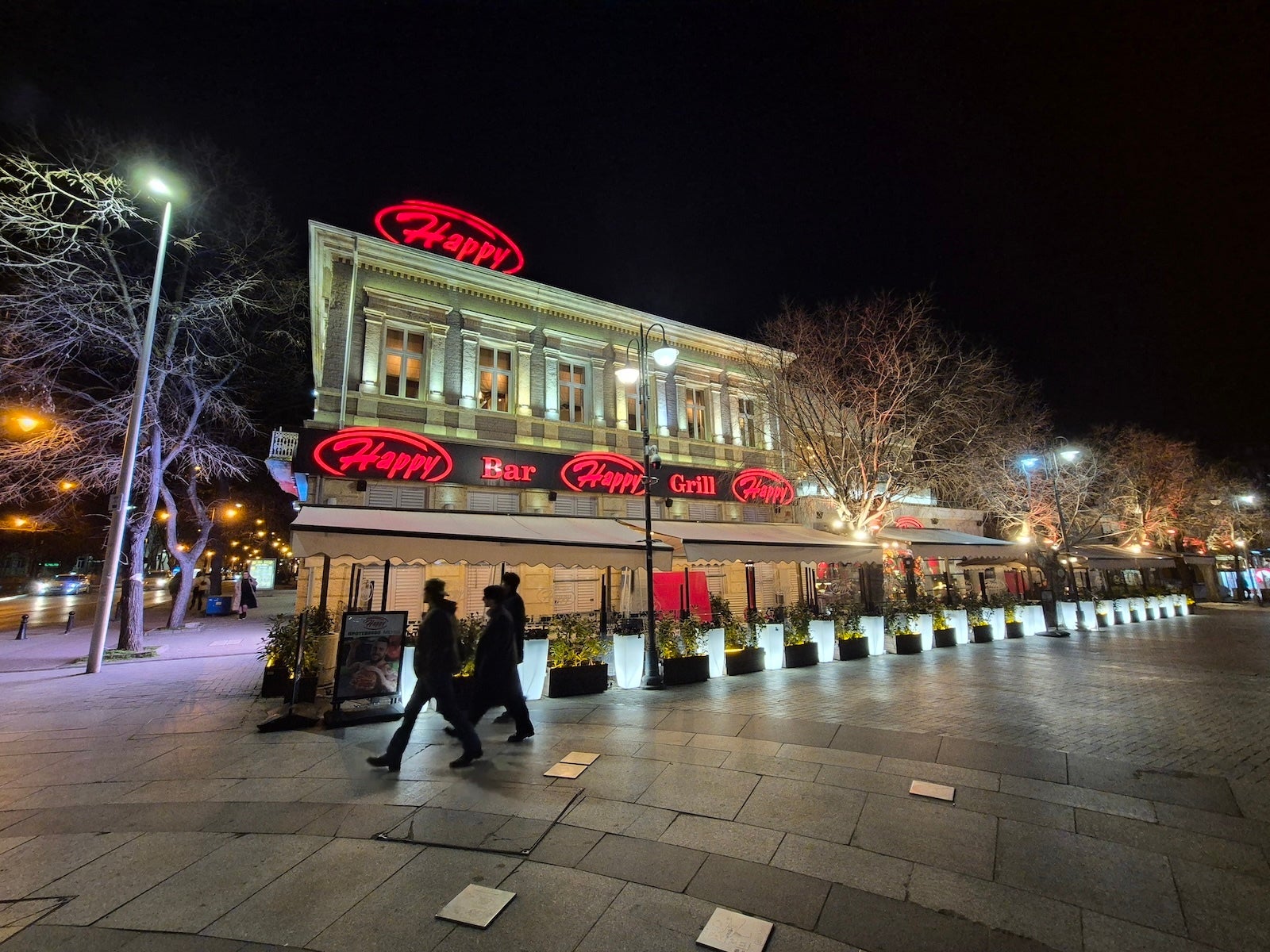
Images from the front camera look quite good and also very similar. Skin tone, detail and focus are all very good. There's an interesting and quite strange difference in the framing. The S26 appears to produce wider selfies, even though the aperture, focal length and field of view are all the same between these two phones.
Battery Life and Charging
4,300 mAh but no silicon inside
The Galaxy S26 comes with a slight battery upgrade. It's nothing radical, just 300 mAh on top of the 4,000 mAh battery that the past two generations have. We don't think Samsung is ready to incorporate silicon-carbon tech in the Galaxy lineup just yet, and while other flagships now offer 7,300 mAh batteries (the OnePlus 15), the Galaxy S series is lagging behind.
The Galaxy S24 managed a battery life estimate of 6h 37m, which put it at 85th place among phones tested in the past 2 years. That's a disappointing result, and many people find the battery life of the vanilla S-series phones a bit underwhelming. Let's see if 300 mAh makes a significant difference. Test results below.
Well, what do you know! The battery life result is identical, despite the 300 mAh advantage of the Galaxy S26. If you look a the different segments of the test, the score is very similar there as well. Where have these milliamphours go? It's quite likely the Exynos 2600 is not as efficient as we thought it is.
Charging is another area where Samsung has been rather conservative and the Galaxy S26 is a prime example. There's no change to the charging speeds compared to the past two generations. The Galaxy S24 supports 25W of wired charging power and fills its battery from zero to full in 1 hour and 12 minutes. For the Galaxy S26 this time is 1 hour and 16 minutes - it's slightly slower, but given the larger battery, it's understandable.
These two phones are two years apart and comparing them does indeed show some differences. The processor in the Galaxy S26 is much faster than the one inside the S24 (although the latter is plenty fast), and there's more RAM and storage as well. The battery is slightly larger and the screen is also bigger.
Should you upgrade then if you're still rocking the Galaxy S24? Well, probably not, as there are five years left in that model, and the real-life difference won't be that huge, we reckon.
The camera benchmark and the battery test also show that the Galaxy S24 holds up pretty well against its much newer rival.
Why you can trust PhoneArena
25+Years of Experience
4161Product Reviews
Every product we review or recommend is thoroughly tested by our in-house experts in real-world conditions, following our
review methodology
and
ethics statement
to ensure honest, independent, and data-driven results.
Mariyan, a tech enthusiast with a background in Nuclear Physics and Journalism, brings a unique perspective to PhoneArena. His childhood curiosity for gadgets evolved into a professional passion for technology, leading him to the role of Editor-in-Chief at PCWorld Bulgaria before joining PhoneArena. Mariyan's interests range from mainstream Android and iPhone debates to fringe technologies like graphene batteries and nanotechnology. Off-duty, he enjoys playing his electric guitar, practicing Japanese, and revisiting his love for video games and Haruki Murakami's works.
A discussion is a place, where people can voice their opinion, no matter if it
is positive, neutral or negative. However, when posting, one must stay true to the topic, and not just share some
random thoughts, which are not directly related to the matter.
Things that are NOT allowed:
Off-topic talk - you must stick to the subject of discussion
Offensive, hate speech - if you want to say something, say it politely
Spam/Advertisements - these posts are deleted
Multiple accounts - one person can have only one account
Impersonations and offensive nicknames - these accounts get banned
To help keep our community safe and free from spam, we apply temporary limits to newly created accounts:
New accounts created within the last 24 hours may experience restrictions on how frequently they can
post or comment.
These limits are in place as a precaution and will automatically lift.
Moderation is done by humans. We try to be as objective as possible and moderate with zero bias. If you think a
post should be moderated - please, report it.
Have a question about the rules or why you have been moderated/limited/banned? Please,
contact us.










































Things that are NOT allowed:
To help keep our community safe and free from spam, we apply temporary limits to newly created accounts: