Samsung Galaxy S26 Ultra vs Galaxy S25 Ultra: All the differences
Slight design changes, faster charging, new display features and new camera optics.

We may earn a commission if you make a purchase from the links on this page.
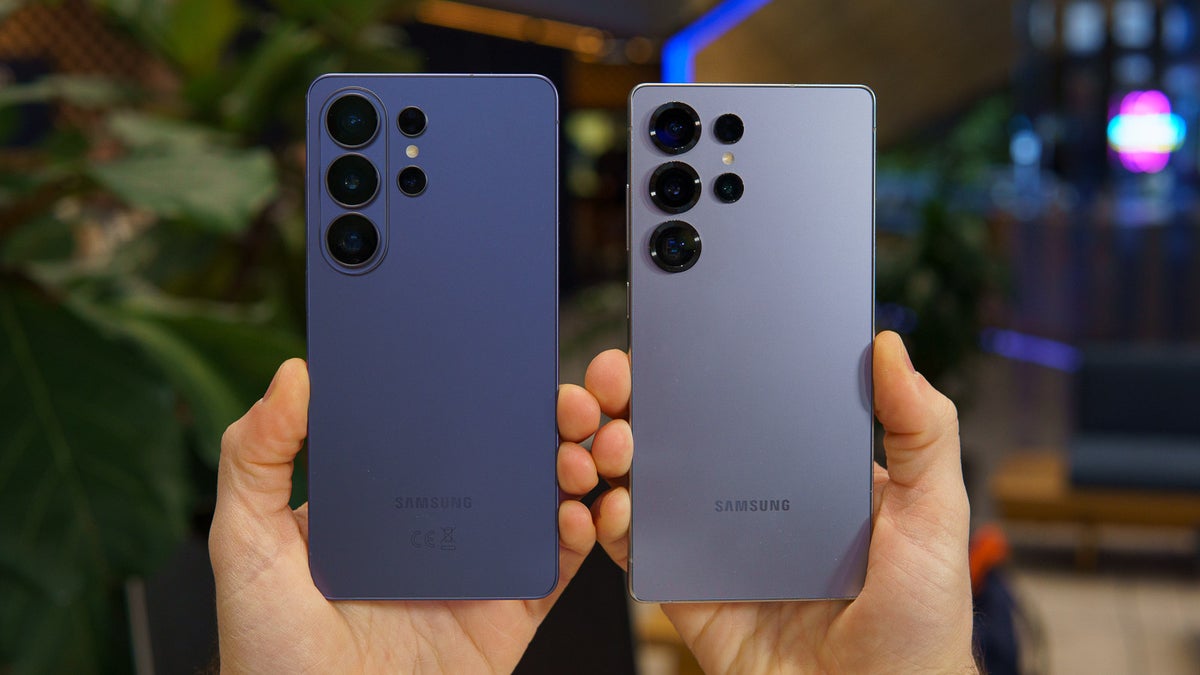
The Galaxy S26 Ultra on the left and S25 Ultra on the right. | Image by PhoneArena
Samsung's new Galaxy S26 Ultra comes with a more powerful chipset, a built-in privacy display, faster charging and improved camera optics, but are those changes enough to interest Galaxy S25 Ultra owners?
So, is the S26 Ultra worthy of being next in line?
Galaxy S26 Ultra vs Galaxy S25 Ultra differences:
| Galaxy S26 Ultra | Galaxy S25 Ultra |
|---|---|
| Snapdragon 8 Elite Gen 5 for Galaxy (all regions) | Snapdragon 8 Elite for Galaxy |
| 6.9" Dynamic AMOLED 2X, up to 2,600 nits | 6.9" Dynamic AMOLED 2X, up to 2,600 nits |
| Gorilla Glass Armor 2 | Gorilla Glass Armor 2 |
| Built-in Privacy Display mode | No Privacy Display mode |
| 200 MP wide with updated optics | 200 MP wide |
| 50 MP 5x captures more light with an f/2.9 aperture | 50 MP 5x with f/3.4 aperture |
| Up to 60W (Super Fast Charging 3.0) | 45W |
| Up to 25W (Super Fast Wireless Charging) | 15W |
| 7.9 mm, 214 g | 8.2 mm, 218 g |
| Aluminum frame | Titanium frame |
Table of Contents:
Read more:
Design and Size
A lighter build and a new look for the cameras

Thinner, lighter, and cleaner on the back. The S26 Ultra makes better what was already great. | Image by PhoneArena
Last year, Samsung massively reduced the thickness and weight of the Ultra model, so I didn’t expect the company to push even further on that front with this year’s model. Yet it has. Samsung has managed to reduce the thickness to just 7.9 mm, down from 8.2 mm on the S25 Ultra (8.6 mm on the S24 Ultra). The new model also weighs only 214 grams, 4 grams less than the S25 Ultra.
All of these reductions might not sound impressive at first, but keep in mind that these changes were one of the S25 Ultra’s strongest selling points back in 2025, and already massively impressive.
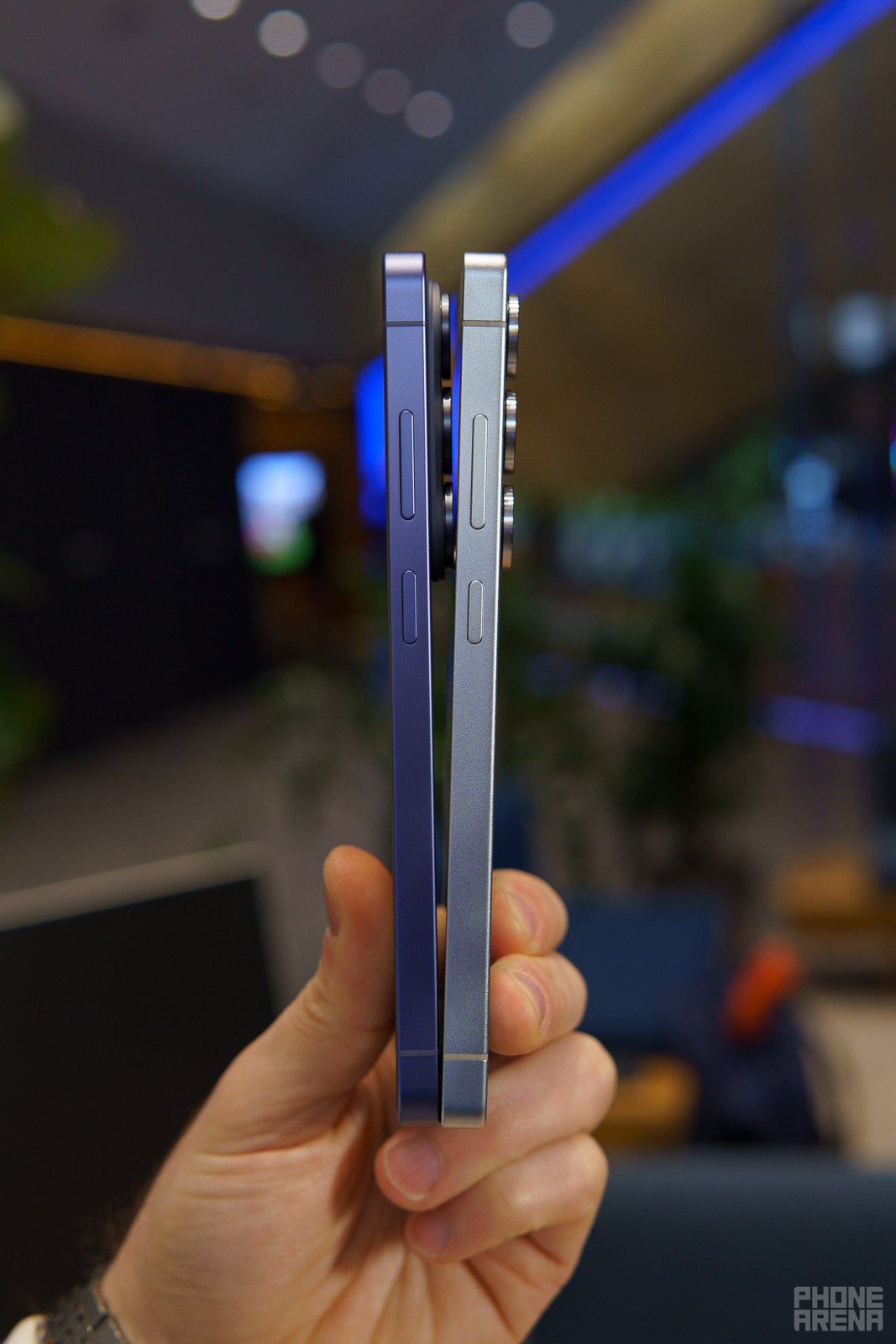
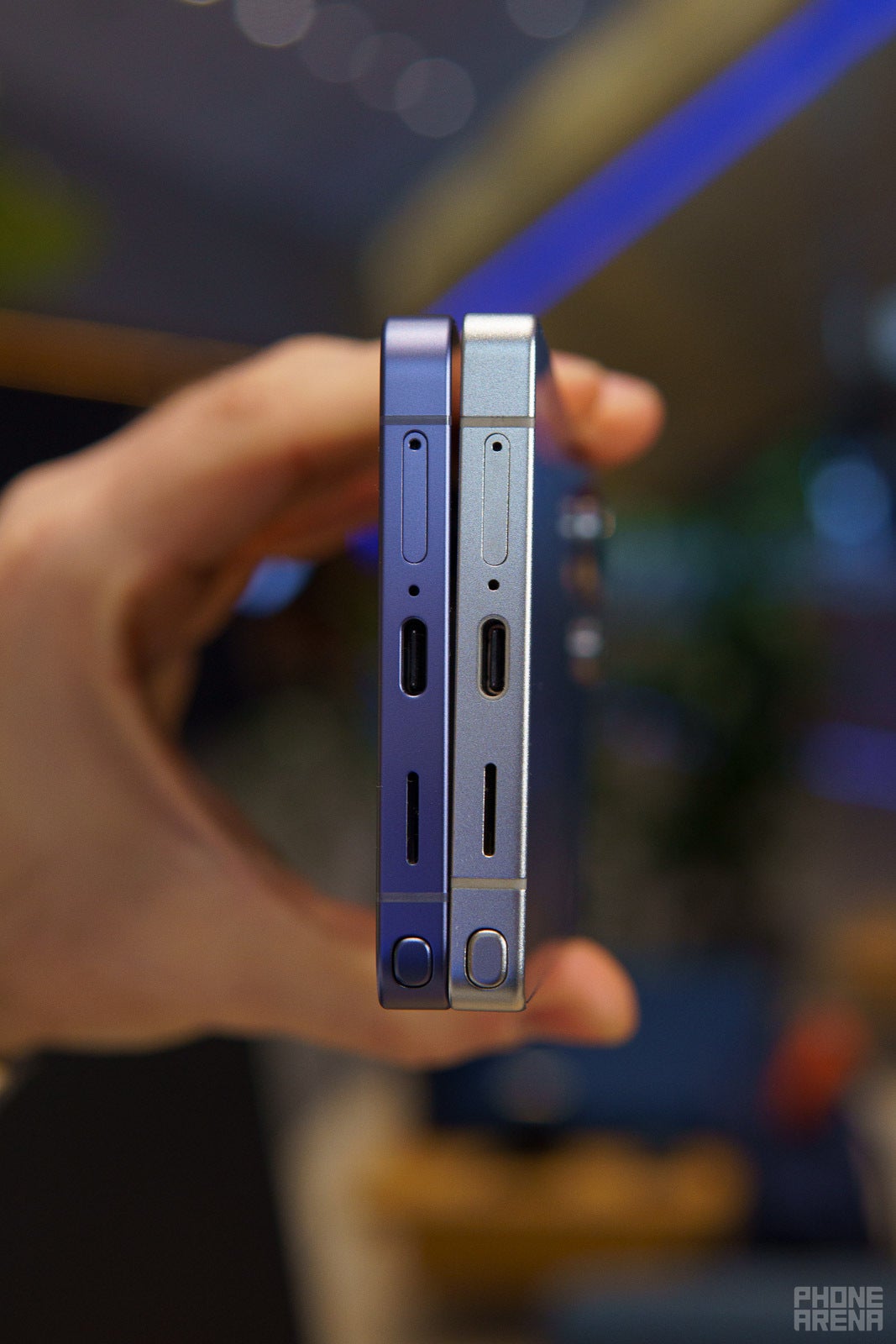
| Galaxy S26 Ultra | Galaxy S25 Ultra |
|---|---|
| Thickness 7.9 mm | Thickness 8.2 mm |
| Dimensions Around 163.6 x 78.1 mm | Dimensions 162.8 x 77.6 mm |
| Weight Around 214 grams | Weight 218 grams |
If you are an avid fan of the S Pen, rest assured—it is still here. Also, the frame keeps its squared-off profile with rounded corners, and the phone remains IP68-rated for water and dust resistance.
Display Differences

Same 2,600 nits, but Privacy Display adds a real hardware shield for your screen. | Image by PhoneArena
It is great for marketing when you can boast about higher numbers, like 3,000 nits of peak brightness, for example. But Samsung is not doing that with the S26 Ultra. While the phone comes with the same peak brightness as its predecessor, it introduces a cool new feature—Privacy Display.
| Galaxy S26 Ultra | Galaxy S25 Ultra |
|---|---|
| Size 6.9" | Size 6.9" |
| Brightness 2600 nits (peak) | Brightness 2600 nits (peak) |
When enabled, Privacy Display narrows side viewing angles so the screen is harder to read from off-axis while keeping the image clear head-on. Samsung positions this as a built-in privacy layer rather than a software trick, and it can be customized to activate in specific moments like typing a PIN or when opening specific apps. Users can also choose between different strengths.
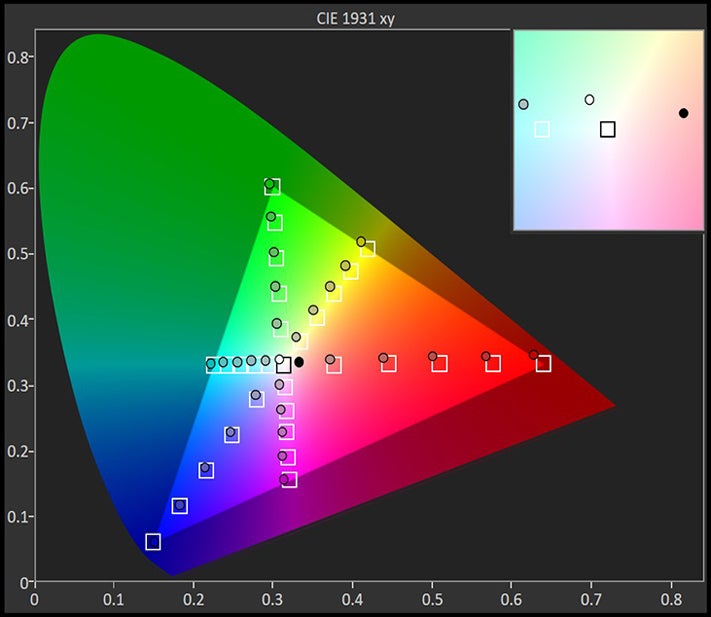
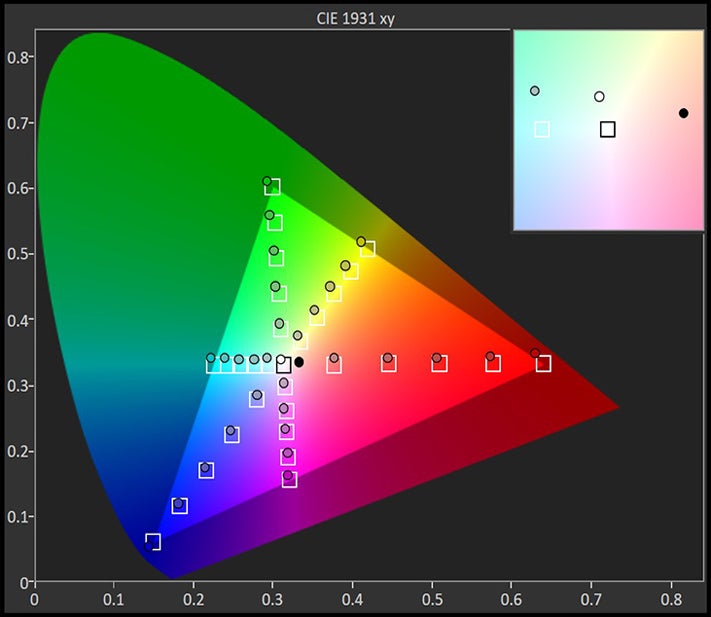
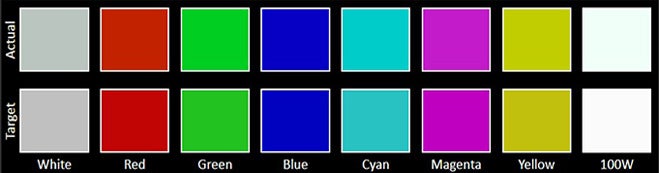
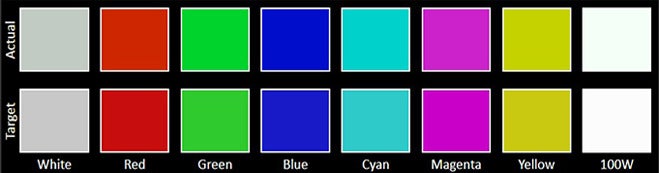


One slight disappointment is the unchanged peak screen brightness. Samsung claims the screen reach 2,600 nits, but we guess that's tested against a tiny white spot. On our standardized 20% white level test (the rest of the screen is black), the S26 Ultra scored in the 2,400 nits vicinity, on par with the S25 Ultra. However, other phones like the Pixel 10 Pro XL can hit noticeably higher numbers, reaching 2,800 nits or even higher, which helps for outdoor use.
Performance and Software
Snapdragon for all regions, better heat management
The S26 Ultra comes with Qualcomm’s Snapdragon 8 Elite Gen 5 for Galaxy no matter where you buy it from. Samsung still refrains from splitting the chipsets with Exynos versions for the Ultra. That’s not the case with the S26 and S26 Plus, which are Snapdragon in the US, China, and Japan, and Exynos 2600 in Europe.
Performance-wise, Samsung says the S26 Ultra has a 19% faster CPU, a 24% stronger GPU, and a 39% improved NPU (responsible for AI features) compared to the Galaxy S25 Ultra. Clearly, the focus was on improving the performance of AI-related functions.
There is also a redesigned vapor chamber and other small improvements to help the S26 Ultra maintain peak performance levels for longer than the S25 Ultra.
| Galaxy S26 Ultra | Galaxy S25 Ultra |
|---|---|
| Chip Qualcomm Snapdragon 8 Elite Gen 5 (for Galaxy) | Chip Qualcomm Snapdragon 8 Elite (for Galaxy) |
| Process 3nm | Process 3nm |
| RAM, Storage 12/256 GB 12/512 GB --- 16/1 TB LPDDR5X RAM UFS 4.0 or 4.1 storage | RAM, Storage 12/256 GB 12/512 GB 12/1 TB 16/1 TB LPDDR5X RAM UFS 4.0 storage |
As for the storage and memory, Samsung keeps the same simple rule: 256 GB and 512 GB models come with 12 GB RAM, while the 1 TB model comes with 16 GB RAM. For now, I assume the storage type is UFS 4.0, although this is still not confirmed at this stage.
When it comes to software, the S26 Ultra launches with Android 16 and One UI 8.5, backed by Samsung’s seven-year OS and security update commitment.
There are no AI features that won’t be available on the S25 Ultra. Both phones come with Samsung’s Now Brief and Now Bar experiences (plus the new Now Nudge behaviors) that surface relevant actions and information throughout the day. Samsung explicitly mentioned Gemini and Perplexity integration alongside its own tools too.
CPU Performance Benchmarks:
Multi-core CPU performance, which is responsible for more demanding tasks, is also up by a similar margin.
Gamers also see a massive boost in performance with this new chip. The S26 Ultra starts with a burst of performance, hitting nearly 8,000 points on 3D Mark Wildlife Extreme, but it also quickly throttles to less than half that score. After 20 minutes of heavy-duty gaming, the S26 Ultra is down to 3,741 points. That's still a solid score compared to the nearly 3,000 points of the previous generation, a leap of nearly 20%.
Still, we have seen dedicated gaming phones like the RedMagic 11 Por hold that score of nearly 7,000 points throughout the whole benchmark thanks to better cooling and a roomier design.
Camera
Same image sensors but with more capable optics

Same camera layout, brighter lenses and stronger video tools make the S26 Ultra a creator upgrade. | Image by PhoneArena
The S26 Ultra’s cameras will sound very familiar: a 200 MP main camera, a 50 MP ultrawide, a 10 MP 3x telephoto and a 50 MP 5x telephoto.
| Galaxy S26 Ultra | Galaxy S25 Ultra |
|---|---|
| Main 200 MP, f/1.4 24 mm 1/1.3" sensor size | Main 50 MP, f/1.7 24 mm 1/1.3" sensor size |
| Ultrawide 50 MP, f/1.9 13 mm 1/2.5" sensor size | Ultrawide 50 MP, f/1.9 13 mm 1/2.5" sensor size |
| 5x Telephoto 50 MP, f/2.9 5X zoom (111mm) 1/2.52" sensor size | 5x Telephoto 50 MP, f/3.4 5X zoom (111mm) 1/2.52" sensor size |
| 3x Telephoto 10 MP, f/2.4 3x zoom (67mm) 1/3.94" sensor size | 3x Telephoto 10 MP, f/2.4 3x zoom (67mm) 1/3.52" sensor size |
Samsung is also leaning harder into creator-focused video tools this year. The Galaxy S26 Ultra supports 8K recording at 30 fps and adds 4K recording at up to 120 fps in Pro Video mode. It also introduces support for APV, which stands for Advanced Professional Video. APV is a new high-quality video format designed to preserve more detail, dynamic range, and color information during recording, giving users more control during their workflow.
This makes the S26 Ultra better suited for serious content creation because it allows users to edit footage with more flexibility in post-production.
Galaxy S26 Ultra vs Galaxy S25 Ultra camera samples:
The S26 Ultra camera fixes my biggest gripe with the camera of its predecessor — its consistently low exposure. Photos from the S26 Ultra look brighter and more cheerful.
In low light, the faster aperture on the main and 5x cameras results in better detail. Basically, the S26 Ultra is much more efficient with light. When I put them head-to-head, the S26 Ultra kept the images cleaner. Both shot at the same shutter speed, but the newer model uses a lower ISO for a cleaner shot.
You see that same edge with the 5x zoom, too. But the real "wow" factor is in the dark: both phones capture a ton of light at night, but the S26 Ultra snaps the photo almost twice as fast as the S25. That extra speed is the difference between a sharp late-night shot and a blurry mess.
Battery Life and Charging
Same battery capacity, but with faster wired and wireless charging

Same 5,000 mAh, but 60W wired and 25W wireless make the S26 Ultra much quicker to top up. | Image by PhoneArena
For yet another year, Samsung has decided to keep the same 5,000 mAh battery inside the Ultra, so if we see any improvements, they will most likely come from the new chipset.
PhoneArena Battery and Charging Test Results:
Wireless charging also takes a major step forward to up to 25W vs 15W on the predecessor, alongside Wireless PowerShare for reverse wireless charging (no changes there).
| Galaxy S26 Ultra | Galaxy S25 Ultra |
|---|---|
| Battery size 5,000 mAh | Battery size 5,000 mAh |
Charging speeds 60W wired 25W wireless charging USB-C 3.2 | Charging speeds 45W wired 15W wireless charging USB-C 3.2 |
There is still no built-in magnetic alignment system. If you want that on an Android, you are still limited to case-based solutions or a Google Pixel 10.
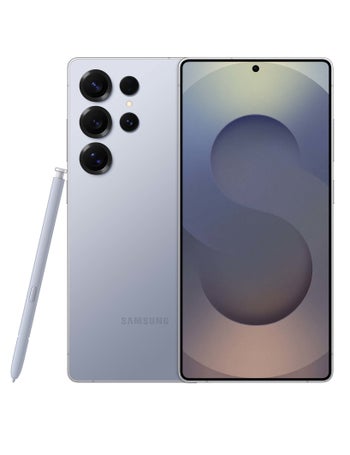
Specs Comparison
|
|
| Samsung Galaxy S26 Ultra | Samsung Galaxy S25 Ultra |
| Dimensions | |
|---|---|
| 163.6 x 78.1 x 7.9 mm (~10 mm with camera bump) | 162.8 x 77.6 x 8.2 mm (~9.1 mm with camera bump) |
| Weight | |
| 214.0 g | 218.0 g |
| Size | |
|---|---|
| 6.9-inch | 6.9-inch |
| Type | |
| Dynamic AMOLED, 120Hz | Dynamic AMOLED, 120Hz |
| System chip | |
|---|---|
| Snapdragon 8 Elite Gen 5 for Galaxy SM8850-1-AD (3 nm) | Snapdragon 8 Elite for Galaxy SM8750-AB (3 nm) |
| Memory | |
| 12GB (LPDDR5X)/256GB (UFS 4.0) 12GB/512GB 16GB/1024GB |
12GB (LPDDR5X)/256GB (UFS 4.0) 12GB/512GB 12GB/1024GB |
| Type | |
|---|---|
| 5000 mAh | 5000 mAh |
| Charge speed | |
| Wired: 60.0W Wireless: 15.0W | Wired: 45.0W Wireless: 15.0W |
| Main camera | |
|---|---|
| 200 MP (OIS, PDAF) Sensor name: Samsung ISOCELL HP2 Aperture size: F1.4 Focal length: 23 mm Sensor size: 1/1.3" Pixel size: 0.6 μm | 200 MP (OIS, Laser and PDAF) Sensor name: Samsung ISOCELL HP2 Aperture size: F1.7 Focal length: 24 mm Sensor size: 1/1.3" Pixel size: 0.6 μm |
| Second camera | |
| 50 MP (Ultra-wide, PDAF) Sensor name: Samsung JN3 Aperture size: F1.9 Sensor size: 1/2.5" Pixel size: 0.7 μm | 50 MP (Ultra-wide, PDAF) Sensor name: Samsung JN3 Aperture size: F1.9 Pixel size: 0.7 μm |
| Third camera | |
| 10 MP (Telephoto, OIS, PDAF) Sensor name: Sony IMX754 Optical zoom: 3.0x Aperture size: F2.4 Sensor size: 1/3.94" Pixel size: 1.12 μm | 10 MP (Telephoto, OIS, PDAF) Sensor name: Sony IMX754 Optical zoom: 3.0x Aperture size: F2.4 Focal Length: 67 mm Sensor size: 1/3.52" Pixel size: 1.12 μm |
| Fourth camera | |
| 50 MP (Telephoto, Periscope, OIS, PDAF) Sensor name: Sony IMX854 Optical zoom: 5.0x Aperture size: F2.9 Focal Length: 115 mm Sensor size: 1/2.52" Pixel size: 0.7 μm | 50 MP (Telephoto, Periscope, OIS, PDAF) Sensor name: Sony IMX854 Optical zoom: 5.0x Aperture size: F3.4 Focal Length: 111 mm Sensor size: 1/2.52" Pixel size: 0.7 μm |
| Front | |
| 12 MP (PDAF, HDR) | 12 MP (PDAF, HDR) |
See the full
Samsung Galaxy S26 Ultra vs Samsung Galaxy S25 Ultra specs comparison
or compare them to other phones using our
Phone Comparison tool
Summary
Great upgrades, but not FOMO worthy. The S26 Ultra is a strong successor, not a must. | Image by PhoneArena
The Galaxy S26 Ultra brings a few notable upgrades like faster charging, a faster processor that’s much better at AI, and a new and unique privacy feature. We also have improved optics for the main and 5x telephoto cameras. All great stuff!
Now, whether the new model is worth upgrading to if you own the S25 Ultra—I don’t think so. We no longer live in an age where each new generation can justify such an early upgrade. It doesn’t look like there is any danger of FOMO with the S26 Ultra.

Follow us on Google News









Things that are NOT allowed:
To help keep our community safe and free from spam, we apply temporary limits to newly created accounts: