Samsung Galaxy Buds 4 Pro vs Sony WF-1000XM6: the high-end wireless battle is heating up
The Galaxy Buds 4 Pro lands in a market that's still celebrating the fresh Sony WF-1000XM6 launch. What now?
We may earn a commission if you make a purchase from the links on this page.
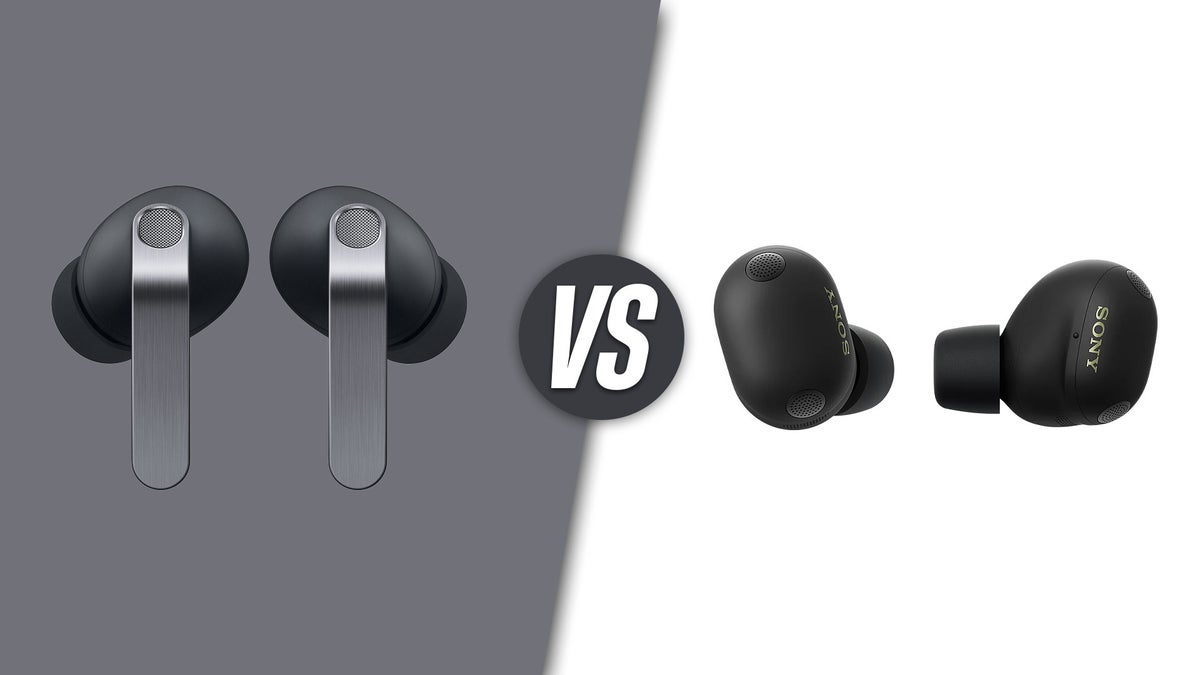
Two high-end wireless buds coming out weeks apart! | Image by Samsung and Sony
Samsung's Galaxy Buds 4 models were not just a refresh with a new number slapped on them. They came with new design, fit, sound quality, ANC, and even the Bluetooth connectivity standard they run on.
A couple of weeks before their debut, however, Sony already released their new WF-1000XM6 earbuds, with more microphones, improved ANC and sound quality, and a new design that veers more into the "We do it our way" direction, which is typical for Sony. It's a tough time to be an earbud shopper!
Here's the problem in a nutshell - both claim to sound good, fit good, and be the best sound you can buy. And both cost a pretty penny, though it's worth mentioning that the Galaxy Buds 4 Pro are more conservative with their price tag at $249.99, while Sony goes up to $299.99. Which one of them deserves your hard-earned cash?
Table of contents:
Galaxy Buds 4 Pro vs Sony WF-1000XM6 specs:
| Galaxy Buds 4 Pro | Sony WF-1000XM6 | |
|---|---|---|
| Color options | Black, White, Pink Gold | Black, Platinum Silver |
| Audio | Dual driver: 11 mm woofer 5.5 mm planar tweeter | Single driver: 8.4 mm |
| Codecs | SSC, SSC UHQ, AAC SBC, LC3 | LDAC, AAC SBC, LC3 |
| Connectivity | Bluetooth 6.1, dual-band Bluetooth Auto-switch (Samsung account) | Bluetooth 5.3 Bluetooth multipoint |
| Battery life | ANC On: Buds - 6 hours With case - 26 hours ANC Off: Buds - 7 hours With case - 30 hours | ANC On: Buds 8 - hours With case - 24 hours ANC Off: Buds - 12 hours With case - 36 hours |
| Ingress protection | IP57 on buds | IPx4 on buds |
Galaxy Buds 4 Pro vs Sony WF-1000XM6 design
The Galaxy Buds 4 Pro refined the stem design much further than we had expected, considering how their predecessors looked. Now, they are smaller, sleeker, and have a sweet brushed metal accent over their flat stems. There are still physical controls on them, via pinching or swiping on the stem, with a groove mark placed for easy tactile navigation.
I, personally, have trouble keeping most in-ear bud designs in my ears. But Apple's Apple's AirPods Pro 3 and Samsungs Galaxy Buds 4 Pro knocked it out of the park for me. They stay locked in, and they don't introduce pain after hours of use.
Sony's WF-1000XM6 stick with the stemless bud design. Granted, they are less bulky in this iteration, but they are still kind of lumpy. You are also expected to just stick them in your ears and have them hang there. No rotating to lock them in (like on Pixel Buds Pro 2), no nubs to press up against your ears. They only come with memory foam tips, which are supposed to expand inside your ear canals and ensure a solid seal and steady fit. Memory foam does not work for me, which is why I replaced them with Moondrop Spring tips to actually keep the WF-1000XM6 in my ears (I highly recommend this sidegrade).
Another complaint — Sony's buds still use touch controls on their outer shells, which many users dislike. It leads to accidental taps when adjusting a bud, or just an unpleasant feeling when tapping on it, as it jabs against your ear. And yes, you control volume via rapid tapping on the left or right earbud, which is inaccurate, slow, and annoying. On the plus side, regular controls like one-tap to play/pause is super-fast to react. So, you are not left there wondering, "Did my tap even register?".
Sony's WF-1000XM6 stick with the stemless bud design. Granted, they are less bulky in this iteration, but they are still kind of lumpy. You are also expected to just stick them in your ears and have them hang there. No rotating to lock them in (like on Pixel Buds Pro 2), no nubs to press up against your ears. They only come with memory foam tips, which are supposed to expand inside your ear canals and ensure a solid seal and steady fit. Memory foam does not work for me, which is why I replaced them with Moondrop Spring tips to actually keep the WF-1000XM6 in my ears (I highly recommend this sidegrade).
If you are catching my sentiment thus far, I am much happier with the Galaxy Buds 4 Pro's design, controls, and fit. But I still found myself using the Sonys more — more on that in the sound section.
The new Galaxy Buds 4 Pro case has a smaller footprint than before, designed to lie flat, and still has a transparent lid. It's a bit thicker as a result, but generally a more compact charging case.
Sony's charging case is a rounded stone-like design that isn't too big, too, but will still look slightly bulkier than the Galaxy Buds case.
What's more important here is the IP rating. Samsung gives us IP57 on the buds, meaning limited dust protection and adequate water ingress protection. The WF-1000XM6 buds have IPx4, which means no guaranteed dust protection, and they are only rated to survive mild splashes of water.
Samsung has been using a dual-speaker system with a dynamic woofer and planar tweeter since last year. That sounds impressive, but doesn't mean much if the acoustics and tuning are not on point. The Galaxy Buds 4 Pro seeks to improve the soundstaging and presence of the sound with a wider woofer membrane.
Galaxy Buds 4 Pro vs Sony WF-1000XM6 Sound and ANC
Samsung has been using a dual-speaker system with a dynamic woofer and planar tweeter since last year. That sounds impressive, but doesn't mean much if the acoustics and tuning are not on point. The Galaxy Buds 4 Pro seeks to improve the soundstaging and presence of the sound with a wider woofer membrane.
And yes, the Galaxy Buds 4 Pro sound better — they make the Buds 3 Pro sound weak, sibilant, and morally aged. The Buds 4 Pro are balanced, super-wide, and have a tasty bass boost to give you some thump and fun for your listening sessions.
Sony still bets on a single driver in its earbuds, which is not necessarily bad — single speaker in-ears can still sound great and we have plenty of examples for that.
In fact, the WF-1000XM6 is one such example. Out of the box, they were too bright and punchy to me. I did have to use the Sony Headphones Connect app to open the EQ and tune them up to taste. And boy, do they deliver for me now.
The WF-1000XM6 have an aggressive snap to their highs, which makes everything sound more energetic and focused, they have plenty of detail in the mids, and they have a nice thumpy bass that is very well separated from the muddy low-mids. They are well on their way to becoming my favorite buds for 2026, which is why I spent so much time looking for the right silicone tips that'd help me keep them in place.
I do want to be clear — the Galaxy Buds 4 Pro sound fantastic. They are even wider in stereo than the WF-1000XM6, which can have its perks for immersion and different types of multimedia. But if I want fun and bop in my ears, I reach for the Sonys nine times out of ten.
And yes, the Galaxy Buds 4 Pro also have a custom EQ, which I have reached for to fine-tune them to taste. I couldn't get the same snap from them, but I would definitely not be complaining if I ended up with nothing but a pair of Buds 4 Pro to listen to my music through.
The Galaxy Buds 4 Pro come with a new Adaptive ANC 2.0, which actively monitors ambient noise and chooses which frequencies to attack instead of relying on pre-set profiles. I can't say I've felt it actively switch anything, but in general, the silence they provide is excellent
And yes, the Galaxy Buds 4 Pro also have a custom EQ, which I have reached for to fine-tune them to taste. I couldn't get the same snap from them, but I would definitely not be complaining if I ended up with nothing but a pair of Buds 4 Pro to listen to my music through.
The Galaxy Buds 4 Pro come with a new Adaptive ANC 2.0, which actively monitors ambient noise and chooses which frequencies to attack instead of relying on pre-set profiles. I can't say I've felt it actively switch anything, but in general, the silence they provide is excellent
Sony offers the same with a new dedicated HD noise-canceling processor in the buds. Again, great ANC, but I do feel I am losing a little bit of the mechanical noise reduction as I have switched away from the memory foam tips.
For pass-through, both do an excellent job at allowing voice frequencies in, so I can have a conversation with the store clerk or something. Though it will never not feel weird to me — just take one earbud off to show some courtesy.
If you pair the Galaxy Buds 4 Pro to a Samsung phone, you will get to enjoy the Samsung Seamless Codec, for a 24-bit, 96 kHz sound quality. Otherwise, you will be using AAC, which is a fine codec, but audiophiles frown at it. Sony supports the high-res LDAC codec, which is pretty much standard on high-end wireless earbuds today. I tested both buds on a Galaxy S26 Ultra and an iPad Pro and am happy in both cases.
If you pair the Galaxy Buds 4 Pro to a Samsung phone, you will get to enjoy the Samsung Seamless Codec, for a 24-bit, 96 kHz sound quality. Otherwise, you will be using AAC, which is a fine codec, but audiophiles frown at it. Sony supports the high-res LDAC codec, which is pretty much standard on high-end wireless earbuds today. I tested both buds on a Galaxy S26 Ultra and an iPad Pro and am happy in both cases.
Voice calls
When paired to a Galaxy phone, the Galaxy Buds 4 Pro will use dual-band Bluetooth connection to transfer your voice with more clarity — up to 16 kHz, Samsung says. That should make sibilant sounds much more clear for the other caller to hear. For non-Galaxy phones, the Buds 4 Pro also use LC3, which is newer and much better than the tired SBC codec,
Special features
The Galaxy Buds 4 Pro now have nod and shake gestures to accept and decline calls. These join voice commands like "next song", "pause music", and "volume up/down". Sure, you can also do it with a voice assistant, but with the feature built-in (when on a Galaxy phone), it's even more convenient.
The Sony WF-1000XM6 also introduced nod and shake gestures. Even better, if you get auto music playback (because you have it set up to start when you enter a location), you can shake to quickly cancel it.
Both earbud models have a feature to cut ANC if you are speaking with someone. Sony also has the feature where you can hold a finger over an earbud to temporarily stop ANC and enhance voice frequencies for a quick conversation.
The Buds 4 Pro now also come with dual AI support — you can call up either Bixby or Gemini without the need to switch them in settings. Sony's buds can still listen for "Hey, Google", if it's set up on your phone.
Live Interpreter — the Galaxy Buds 4 Pro, when paired to a Galaxy phone, can live-translate conversations or phone calls in 22 different languages. To be fair, there are plenty of 3rd party apps that can do that if you choose the Sony earbuds.
The Galaxy Buds 4 Pro come with Bluetooth 6.1, which improves spatial audio performance, as well as device stability and handshake speed. A lot of behind-the scenes upgrades that you technically won’t feel in your day-to-day, but should be there on a modern tech product.
Sony still bets on the tried-and-true Bluetooth 5.3 standard, which is still considered to be high-quality. The only thing you lose is bragging points.
Live Interpreter — the Galaxy Buds 4 Pro, when paired to a Galaxy phone, can live-translate conversations or phone calls in 22 different languages. To be fair, there are plenty of 3rd party apps that can do that if you choose the Sony earbuds.
The Galaxy Buds 4 Pro come with Bluetooth 6.1, which improves spatial audio performance, as well as device stability and handshake speed. A lot of behind-the scenes upgrades that you technically won’t feel in your day-to-day, but should be there on a modern tech product.
Multi-device
The Galaxy Buds 4 Pro does not support Bluetooth multipoint, but will connect easily to Android devices that have the Galaxy Wearable app and are logged into your Samsung account. You do need to go in the app and tap on them to activate them. It sounds like it should be seamless, but more often than not, you need to open the Wearable app to tell it to connect to the Buds 4 Pro. Still less annoying than constant Bluetooth re-pairing.
Sony's WF-1000XM6 support Bluetooth multipoint for dual-device connectivity — it will just switch to the device that started playing audio most recently.
The batteries on the Buds 4 Pro give you 6 hours of use with ANC on, 26 hours with the case total. Sony gives you more from the buds, up to 8 hours with ANC on. But a slightly lower total with the case — 24 hours.
Galaxy Buds 4 Pro vs Sony WF-1000XM6 battery life
The batteries on the Buds 4 Pro give you 6 hours of use with ANC on, 26 hours with the case total. Sony gives you more from the buds, up to 8 hours with ANC on. But a slightly lower total with the case — 24 hours.
Galaxy Buds 4 Pro vs Sony WF-1000XM6: which ones to get?
For fit and feel, especially if you have picky ears like mine, you can't go wrong with the Galaxy Buds 4 Pro. And their sound is excellent, a much needed upgrade over the previous generation. It does play it safe, but at least it will sound polite and balanced to most people. Plus, if you have a Galaxy device, you get to enjoy some extra perks, such as voice-activated commands (next song, volume up / down, play / pause), or nod and shake to accept and decline calls.
For a more energetic sound experience, with some edge and some boom to it, I'd go with the WF-1000XM6. They don't play it "safe", they are unapologetically Sony, and if you are familiar with their sound character, you will find a refined version of it here. The memory foam tips and "just hanging there" design didn't work great for me, but I am told most people have "normal" ears.
Read more:

Follow us on Google News





Things that are NOT allowed:
To help keep our community safe and free from spam, we apply temporary limits to newly created accounts: