Motorola Z8 Preview
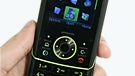
As we were using a prototype, we would not rate the phone and won't test its performance, so this should be considered a Preview.
During the 3GSM 2007 Expo in Barcelona, Spain, Motorola announced a slew of new phones from different classes. Among the typically stylish for the brand models, we saw budget phones, mid-tiers and advanced smartphones with extended functionality. One thing that made an impression on us was that at the same time, the manufacturer displayed phones using Windows Mobile and targeted as enterprise smartphones, some using Linux-JAVA based OS for their core and the innovation, RIZR Z8 that uses Symbian OS. This was the step, showing that Motorola will not limit its efforts to only one system, but will try them all to see which one best suits its needs or to be more precise to use the strong sides of each system for a separate range of devices. Windows Mobile in the “working horses” phones, Linux-Java or Synergy OS in most phones and Symbian in the multimedia devices.
One of the key features, which Motorola uses to advertise the Z8 is the form-factor, which is called "kick-slide". It is similar to the standard slider but at the end of the opening the bottom slider curves to lift the part with the display up. This way, the whole phone curves and this helps to hold it more naturaly next to the face, during a call. This reminds of a clamshell which is also slightly bended when is in open position.
The MOTORIZR Z8 feels very well in the hand both during a call or while using it. The front side has glossy finish applied to it but otherwise the phone is made in mat black plastic, which has rubber-like feeling. This helps for the sporty-feeling of the phone,targeting the active people. Although we are using a prototype, the construction is very solid and the only concern we have is the cover of the Sim card slot. Unlike almost all other modern sliders, this one lacks any assisting mechanism and its movement is carried fully by the hand. To slide it more comfortably, a short line raises between the display and the d-pad. This is where your finger is supposed to push but we often did it over the keyboard or the display. In the beginning both opening and closing are slightly tough, but with the time one gets used to it and does it easily. Still, we would have preferred to see a spring assisted slider.
Logically for a slider, the keyboard is located on the two parts. On the surface below the display are situated the navigation keys. Although they are absolutely flat, they are physical keys that must be pressed and not only touched. They are all very responsible and can be felt well thanks to the raised lines between them. We prefer such type of keys instead of the nowadays popular “touch-keys” like the one used in the Chocolate or Samsung U700 which completely lack tactile feedback and act slow.
The left side has two volume keys and a video-call key tightly fit next to each other with no space between. On the right are the media and the camera shortcuts. All 5 side keys are flat which means you have to know exactly where they are to press them.
The Home screen can be personalized to be "Active standby screen" and one can choose to see up to 5 out of 6 options including Calls, Messages, Emails, Calendar, Profiles and Music Player information. They appear as large shortcuts with information, directly on the display.
By default the main menu is visualised as a grid of 3 by 3 icons but can also be viewed as a list with 8 fields. In both cases, a scroll is present to indicate which page you are viewing, as the menu is shown in more than one, because of the large amount of objects. This reminds us more of the S60 interface, but the way you change the visualization from one type to another is showing you that the currently used Interface is UIQ.
Phonebook
Calendar
Motorola Z8 is quad-band GSM which allows it to work on anycontinent, which is a must for every modern phone in our opinion. Thesingle-band UMTS 2100MHz means high speed 3G data can be used only inEurope/Asia regions where such networks are present and not in America,where 850/1900 MHz bands are used for this.
Comparing the interface of the Motorola Z8 to the one of the Sony Ericsson P1 (another UIQ phone but with touch-display):
The first concern we have is that multimedia files must be put into a specific folder on the memory card in order to be found by the player. The folder is Media Files\ and then subfolders for Audio, Video or other types of files.
Music Player
The music player will help you sort them by filtering them by artist or by album, or after putting them in Playlists. During a playback in addition to the information on the track, an Album Art cover is displayed but in very small size that it is almost useless. The sound played through the speaker of the phone is excellent but as only one speaker is built in, it is in mono and not stereo.
The Video Player is supposed to playback the high-quality video codec MPEG4 H.264 which the best on the market nowadays. Still, we are not sure what exactly are the limits of the phone, as we put two types of H.264 and none of them played. The first one was .MPG file with QVGA resolution, which we encoded on our own and the second one was .MOV file with 320x256 pixels resolution, downloaded from Apple site.
Being a smartphone, it will be able to use applications written for the non-touch version of the OS but still there are none available. Current apps written for touch-capable UIQ will have to be optimized to work on the non-touch version of the OS but as the Z8 is currently the only phone of this type, it is controversial how many apps will be optimized. If Motorola, Sony Ericsson or other manufacturer introduce other UIQ phones without touch-displays, this type of OS will probably become more popular and applications for it will be prepared, but otherwise the functionality will be limited to the default one plus separate apps.
As the phone we are using is a prototype, we won’t comment on its performance for signal reception, battery times and call quality. The Operating System is also supposed to be optimized in the future and it wasn’t a strange when our Z8 crashed or lagged.
Could the Motorola RIZR Z8 live in the crowded market of multimedia phones? – Only time could tell. It has its design as its key features but also as one of its drawbacks. It looks extravagant, different than most other phones and catches the eye, but won’t appeal to people looking for more-serious device. The Kick Slide looks cool although doesn’t have big influence over the usability. If the final version of the phone reduces the problems with the way the music must be saved over the memory and really play a variety of formats, including the high-quality H264 video, the Z8 may become a successful multimedia slider.
Expect our full review when final, commercial samples are released.
Expect our full review when final, commercial samples are released.

Follow us on Google News



Things that are NOT allowed:
To help keep our community safe and free from spam, we apply temporary limits to newly created accounts: