Math wasn't mathing: T-Mobile found to be misleading customers [UPDATED]
A court has ordered T-Mobile to pause its deceptive ad campaign.
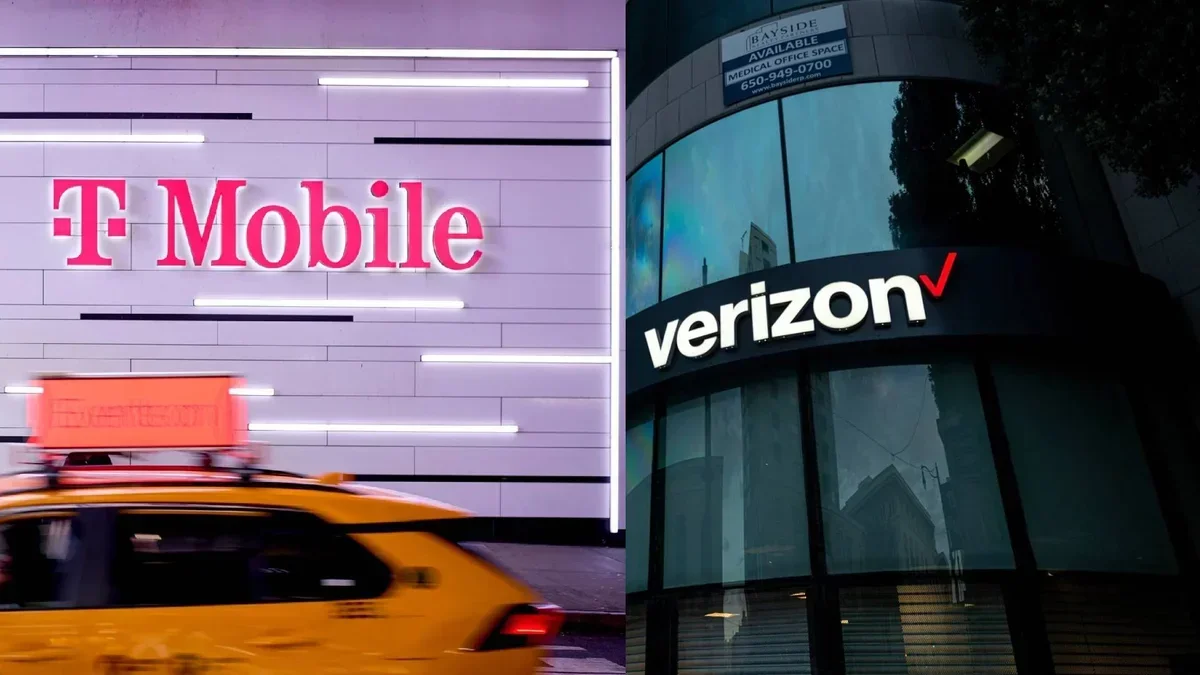
Verizon clinches a legal victory against T-Mobile. | Image by PhoneArena
Update from April 1, 2026:
T-Mobile has objected to the preliminary ruling, claiming the challenged ads correctly showed the savings. Additionally, the company noted that data from market research firm HarrisX corroborates its messaging.
We disagree with the preliminary ruling and will continue to stand behind and vigorously defend our advertising. The challenged ads accurately and transparently show the value included in our Better Value plan that Verizon customers would have to pay extra to receive. Setting this aside, independent data from HarrisX shows that our customers have had the lowest wireless bills compared to Verizon and AT&T over the past five years.
T-Mobile, April 2026
The original story from March 31, 2026 follows below:
T-Mobile and Verizon have been locked in a bitter dispute over misleading ads. It all started when Verizon sued T-Mobile for its Better Value campaign, sparking a countersuit by T-Mobile against Verizon's Better Deal promotion. For now, the court has handed the advantage to Verizon.
Court grants preliminary injunction

T-Mobile has been asked to pause its ads campaign. | Image by Verizon
Verizon accused T-Mobile of exaggerating the savings available to customers switching carriers. T-Mobile stood its ground, claiming Verizon's attempts to block its ads proved the effectiveness of its competitive pricing.
The US District Court for the Southern District of New York has sided with Verizon, granting a preliminary injunction against T-Mobile. T-Mobile has been ordered to withdraw ads touting $1,000 savings tied to its Better Value plan. T-Mobile has also been instructed to take down the savings calculator on its website, which the court found unfairly compares its rates to Verizon's plans.
Verizon defends its subscriber base
In October, shortly after taking over as CEO, Dan Schulman said that Verizon would no longer be the hunting ground for rivals looking to expand market share.
The carrier first brought its grievances to the BBB National Programs' National Advertising Review Board (NARB). When T-Mobile refused to follow the self-regulatory body's recommendations, Verizon escalated the matter to court.
Verizon claimed that T-Mobile overstated the value of its own superfluous benefits and charged phantom fees for perks that Verizon provided. Additionally, Verizon said that its standard pricing was compared to T-Mobile's promotional rates. At the same time, there was no mention of Verizon's discounted offers.
Other holes were also found in T-Mobile's promises, such as not specifying that streaming benefits were optional or mentioning that the advertised savings were only available to customers adding three lines.
Most importantly, even using T-Mobile's own calculator, the savings totaled $660 per year, well below the advertised $1,000 per year.
What's your takeaway from the ruling?
Two wrongs don't make a right
The Court has clarified that it's not suggesting that Verizon did not engage in similarly deceptive behaviour. However, Verizon did take down its calculator before initiating the legal campaign, suggesting some remorse. That's in sharp contrast to T-Mobile's act of doubling down on its messaging despite regulatory warnings.
It's important to note that only a preliminary injunction has been granted, and the final decision is pending.
Thus, while T-Mobile and Verizon may both be engaging in manipulative behaviour, for now, it's T-Mobile that has been asked to back away.
It's important to note that T-Mobile didn't ask for a preliminary injunction against Verizon, so Verizon's campaign can continue. This signals a weakness in T-Mobile's assumptions, suggesting that its case against Verizon might not be strong enough.
The battle of claims
The case encapsulates the changing wireless landscape, one in which carriers are increasingly reluctant to compete on price. Instead, they are more invested in asserting that they provide more value than rivals.
For customers, deceptive messaging could come as a shock if they decide to switch to T-Mobile, considering that the court has found that it doesn't offer a comparison grounded in reality.
While the campaign will be pulled in this instance, this is a reminder for customers not to be swayed by advertisements and to always inspect the fine print before switching to a new provider.

Follow us on Google News








Things that are NOT allowed:
To help keep our community safe and free from spam, we apply temporary limits to newly created accounts: