Just when you thought Quick Share on Android reached its peak, a possible change may slow it down
A possible upcoming change might slow down your file transfers.
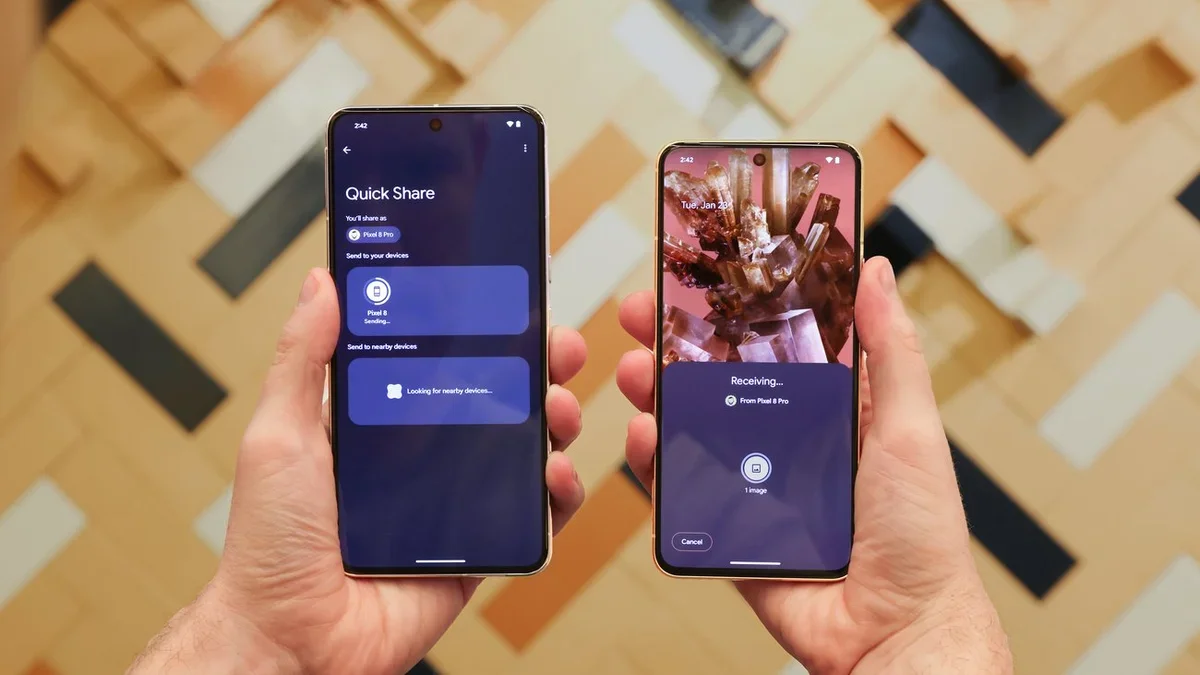
Quick Share functionality on an Android phone. | Image by Google
Something is quietly changing about how you share files on your Android phone, and not everyone is going to be thrilled about it. Before you panic, though, there might actually be a sensible reason behind it.
Quick Share (which you might remember as Nearby Share before Google and Samsung merged their file-transfer tools) might be picking up a new confirmation screen. According to a new APK code breakdown, when someone tries to send you a file via Quick Share, you soon might need to actively approve the incoming transfer before it goes through, rather than having it land automatically.
This applies even when your device is already set to receive from nearby contacts or everyone around you. So yes, it's an extra tap where there wasn't one before.
Quick Share may be adding an extra step, and here's what's going on
Quick Share (which you might remember as Nearby Share before Google and Samsung merged their file-transfer tools) might be picking up a new confirmation screen. According to a new APK code breakdown, when someone tries to send you a file via Quick Share, you soon might need to actively approve the incoming transfer before it goes through, rather than having it land automatically.
However, let's remember here that this is based on unreleased code discovery and not something that has been put into place yet.
File-transfer tools live and die by how frictionless they feel. AirDrop on iPhones became the gold standard precisely because it's fast and low-effort, and Google and Samsung built Quick Share to compete directly on that front. For a while, it was genuinely holding its own.
Recently, we've also had some very fruitful developments with Quick Share on some Android devices, such as Pixels and now the Samsung Galaxy S26 series, having backwards compatibility with the iPhone's AirDrop protocol.
Tacking on a mandatory confirmation screen would feel like a step backward in that race, and honestly, that's a fair reaction. But there's a real case for why this makes sense: unsolicited file transfers are an actual problem. AirDrop became notorious for being exploited in public spaces, forcing Apple to seriously restrict it. Google may simply be getting ahead of that before Quick Share grows big enough to attract the same headaches.
That said, if this is the trade-off for not getting mystery files from strangers on the subway, I feel like most people will accept it once they understand what's actually going on.
I think that what would actually enhance this and make it almost frictionless is to let the users have a trusted-devices list. This would allow us to add our laptops, partner's phone, tablet, or whatever other secondary device we may use, and allow those to still transfer instantly, while everyone else has to wait for approval.
Quick Share already sits in an interesting spot. It's more versatile than AirDrop in some ways, especially with cross-platform support that extends to Windows. But it's always had to fight the perception that it's just "the Android version" of something Apple does better. Slowing it down, even for a legitimate reason, does nothing to help shake that reputation.
Hopefully, Google does more tweaking and refining of this feature before it's considered for a wide rollout.
This change is either smart thinking or a frustrating step back, depending on how you use it
Quick Share send and a new confirmation prompt after the request is accepted. | Images by Android Authority
File-transfer tools live and die by how frictionless they feel. AirDrop on iPhones became the gold standard precisely because it's fast and low-effort, and Google and Samsung built Quick Share to compete directly on that front. For a while, it was genuinely holding its own.
Tacking on a mandatory confirmation screen would feel like a step backward in that race, and honestly, that's a fair reaction. But there's a real case for why this makes sense: unsolicited file transfers are an actual problem. AirDrop became notorious for being exploited in public spaces, forcing Apple to seriously restrict it. Google may simply be getting ahead of that before Quick Share grows big enough to attract the same headaches.
How would you feel if Quick Share adds a confirmation step before incoming transfers?
A little friction can be worth it, but Google needs to think this through
I think that what would actually enhance this and make it almost frictionless is to let the users have a trusted-devices list. This would allow us to add our laptops, partner's phone, tablet, or whatever other secondary device we may use, and allow those to still transfer instantly, while everyone else has to wait for approval.
Quick Share already sits in an interesting spot. It's more versatile than AirDrop in some ways, especially with cross-platform support that extends to Windows. But it's always had to fight the perception that it's just "the Android version" of something Apple does better. Slowing it down, even for a legitimate reason, does nothing to help shake that reputation.

Follow us on Google News


Things that are NOT allowed:
To help keep our community safe and free from spam, we apply temporary limits to newly created accounts: