Samsung Galaxy S7 edge vs Samsung Galaxy S6 edge vs Samsung Galaxy S6 edge+: first look

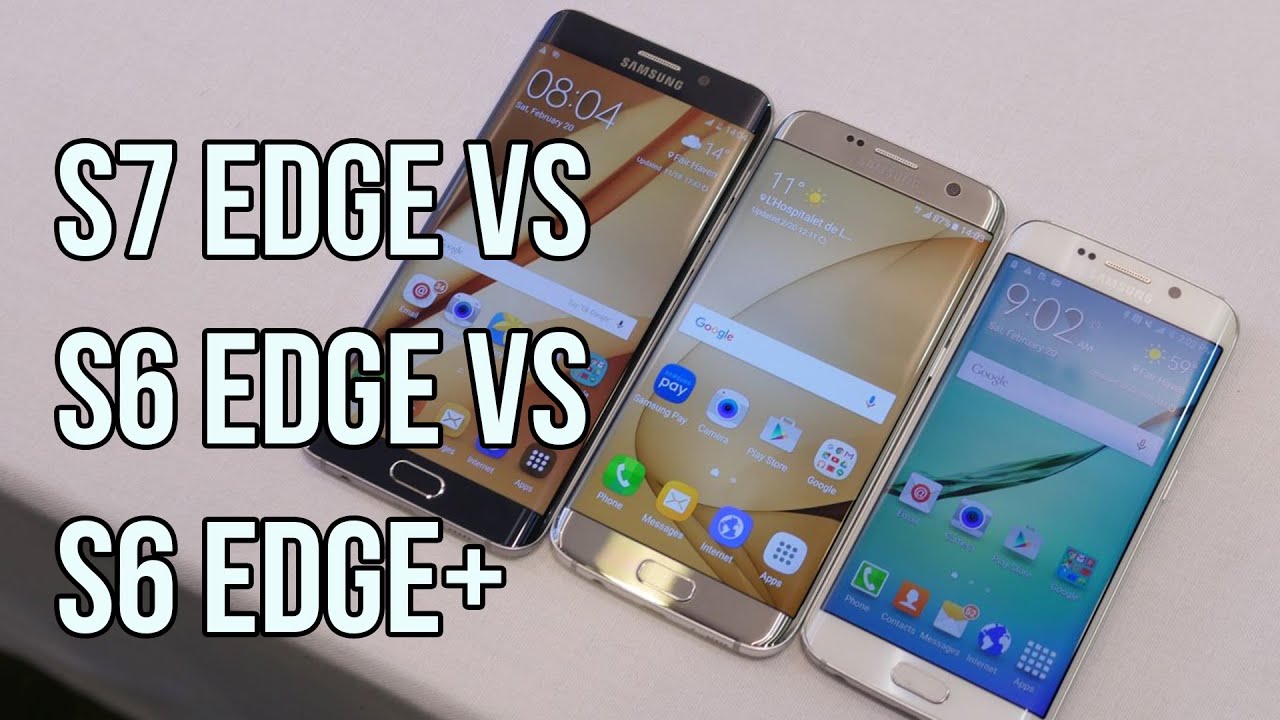
The Samsung Galaxy S7 edge just got announced, bringing along some notable features that make it an admirable successor, worthy of being one of the astounding phones out of MWC 2016. However, it needs a proper quick comparison against its equally esteemed predecessors, which in this case are last year’s variants – the Galaxy S6 edge and S6 edge+. In our short time checking the new smartphone, we managed to quickly compare it and find out exactly how it stacks up.
Design
Sticking to the design DNA established with what they pushed out last year, the Galaxy S7 edge might not be a gigantic overhaul in terms of its design, but when you factor in how they’ve ironed out all of the concerns, while also accompanying it with that IP68 certification, it simply points to the obvious that it’s an iterative improvement that we gladly accept – more so when it’s technically a second-generation offering.
Display
As we’ve clearly indicated already, one of the Galaxy S7 edge’s notable qualities is its incredible screen-to-body ratio. Its middle child attachment is evident in looking at the specs, which is a 5.5-inch 1440 x 2560 Super AMOLED screen. There’s no movement in terms of its resolution, which stands at Quad-HD, but it still looks pretty impressive when compared to the 5.1-inch and 5.7-inch screens of the Galaxy S6 edge and S6 edge+ respectively.
The curved edges of the Galaxy S7 edge are more rounded and before, which as we’ve noted, eliminated the sharp feel we felt on the original S6 edge. And not surprisingly, Samsung maximizes the dual-curved edges to a higher degree. We didn’t think it was all that useful with the original S6 edge, while the S6 edge+ added only a few extras, but the S7 edge takes it to a higher level. Above all, it’s nice that the edge screen now occupies a width of 550 pixels. That’s a vast increase over the skinny look of Samsung’s previous efforts, but in addition to the added real estate, its function has been expanded – now offering support to third parties, as well as the ability to add macros.
Interface and Functionality
Indeed, the edge screen functions of the S7 edge are increased, the TouchWiz UI behind the scenes is largely unchanged. Although it follows in the same premise of being more streamlined than its previous efforts, Samsung doesn’t really deviate from its recipe. Quite frankly, we’re a bit curious about this decision, mainly because we tend to expect some degree of change with successive devices. Running on top of Android 6.0.1 Marshmallow is undeniably the logical place to be at now, looking around the interface doesn’t really reveal any significant changes – it still looks and feels much like the TouchWiz we know.
Between the three, the only notable difference is the new edge screen features found with the new model. Besides that, most people would be hard pressed to uncover any of the differences with the TouchWiz experience.
Processor and Memory
Yes, the S7 edge is going to be donning two different chipsets, the Snapdragon 820 for the US market and the newest Exynos chip everywhere else, but when it boils down to it, there’s very little distinguishing differences when it comes to its raw performance on a superficial level over its predecessors.
And now we come to storage, where the new S7 edge has a distinct advantage. Above all, the introduction of the microSD slot, which is embedded with the SIM tray, offers the S7 edge the option to expand its internal storage capacity, which starts out at 32GB. That’s a comforting idea, mainly because its predecessors only have internal storage to utilize.
Camera

Expectations
Last year brought along the biggest and most ambitious redesigns to the Galaxy franchise, one that for a long time relied heavily on plastic. And while the S7 edge follows through with that same premium design language established with last year’s crew, Samsung is able to enhance the S7 edge in many ways over its predecessors.
The introduction of an IP68 certification, as well as a microSD slot, already adds a lot of weight to the handset’s value. And knowing that it’s sporting upgraded hardware under the hood, too, the S7 edge is the incremental upgrade that’s worth drooling over if you opted to skip last year’s models. To tell you the truth, the only meaningful area that Samsung could’ve focused more on is the TouchWiz experience – it’s just too closely the same, based on what we’re able to scope out in our short time checking it out.
Samsung Galaxy S7 edge vs Samsung Galaxy S6 edge vs Samsung Galaxy S6 edge+ first look

Follow us on Google News




Things that are NOT allowed:
To help keep our community safe and free from spam, we apply temporary limits to newly created accounts: